
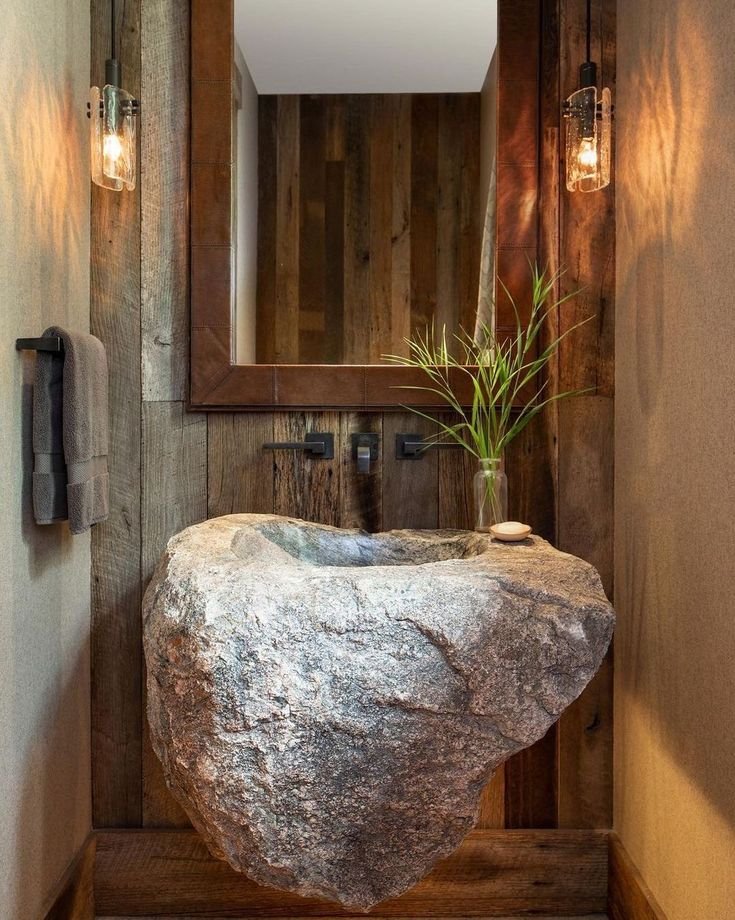
De Ceramica is a luxury tiles and sanitaryware showroom in Gurugram, an AD Pro-listed Hansgrohe Flagship Partner with 22+ years of experience. For homeowners, architects and interior designers across Delhi NCR exploring natural stone basin design ideas for 2026, the 16,000 sq ft De Ceramica showroom at A-511, Sushant Lok Phase 1, Gurugram (opposite IFFCO Chowk Metro) carries a curated collection of marble, granite, travertine and onyx basins from Italian and European ateliers, displayed alongside compatible faucets from Hansgrohe, AXOR and Scarabeo.
There is something that happens when you place your hands in a natural stone basin — a stillness, a grounding — that no ceramic or resin piece can replicate. As 2026 brings a decisive shift in luxury interior design toward material honesty and quiet permanence, stone basin design ideas are moving from niche preference to the defining choice of discerning homeowners. At De Ceramica, Gurugram’s destination for curated bathroom luxury, the response from architects and designers has been unmistakable: once a client sees a natural stone basin in context — paired with the right faucet, set against the right tile — nothing else compares.
This is what that shift looks like, and how to bring it into your home.
Why Stone Basins Are Defining Luxury in 2026
The global conversation around interiors — from the pages of Architectural Digest to the project portfolios on Dezeen — has turned firmly toward materials that carry genuine provenance. Mass-produced sanitaryware, however well-engineered, reads as interchangeable. A hand-carved marble basin or a river stone vessel does not.
This is the cultural moment stone basins occupy in 2026. Homeowners who are building or renovating at a considered level want bathrooms that feel like rooms — not utilities. They want a basin that has weight, grain, memory. Natural stone offers all of this. Each piece is, by definition, one of a kind. The veining in a marble basin will never repeat. The pooled color in an onyx slab is entirely its own. This irreducible uniqueness is precisely what mass production cannot manufacture, and precisely what luxury buyers are now seeking.
Beyond aesthetics, the shift reflects a broader philosophy: that luxury is not performance, but comfort. Not showing off, but feeling genuinely at home. A stone basin does not announce itself loudly. It simply elevates everything around it — the quality of light in the room, the texture of the moment, the way mornings feel.
Design practices that work at the top of the market in Delhi NCR are specifying stone basins for master bathrooms and powder rooms in a way that would have been exceptional five years ago. Today, it is becoming expected.
The Quiet Shift Toward Natural Materials in Luxury Bathrooms
The pivot to natural stone in luxury bathrooms is part of a broader material-honesty movement in residential design. According to Mordor Intelligence, India’s bathroom and toilet fittings market is expected to grow from approximately USD 2.45 billion in 2025 to USD 3.78 billion by 2030, with the premium tier expanding materially faster than the average. Architects working on luxury Delhi NCR residences in DLF Phase, Golf Course Road, Sushant Lok, Vasant Vihar and Defence Colony report that stone basins are now specified in roughly 4 out of 10 master-bathroom briefs in this segment.
Editorial signals reinforce the trend. Architectural Digest and Dezeen have both led recent bathroom coverage with sculptural stone basins as the focal piece, and the AD India 2025-2026 cycle has featured several Delhi NCR projects where the basin is the room’s primary design moment rather than the cabinetry or the tile.
Types of Stone Basins: Finding the Right Material for Your Space
Natural stone is not a single material — it is a family of distinct personalities, each suited to a different design direction.
Marble basins are the most recognized entry point. White Carrara with grey veining reads as classical and serene. Nero Marquina (black marble) is architectural and bold. The surface is cool to the touch and luminous under light, with veins that draw the eye without demanding attention.
Onyx basins are for spaces that embrace drama. Semi-translucent and richly colored — golds, greens, rust — onyx comes alive when backlit. The effect in a powder room with a concealed LED source beneath the basin is extraordinary, something ArchDaily has featured in residential projects across the Middle East and Europe.
Travertine basins offer a warmer, more textural character. The material’s natural pitting and fossilized grain give it an organic quality that suits earthy, warm palettes — terracotta tiles, unlacquered brass, linen walls. Travertine feels ancient in the best possible sense.
River stone and pebble basins — carved from smooth river boulders — have a sculptural rawness that works exceptionally well in spa-style bathrooms. The rounded form is tactile and meditative.
Granite basins are the most durable of the stone family. Dense, non-porous, and resistant to heat and moisture, granite suits high-use family bathrooms without compromising on character. Dark granites in particular pair beautifully with warm metal fittings.
The right material depends on your light conditions, your tile palette, and how the space is used. At De Ceramica, the curated collection spans all of these stone families, allowing you to see and touch each before deciding.
Stone Basin Materials Compared: How to Choose for an Indian Bathroom
| Material | Look | Maintenance | Sealing Frequency | Indicative Price Range (INR) | Best Suited For |
|---|---|---|---|---|---|
| Marble (Calacatta, Carrara, Statuario) | Veined, classical luxury | Moderate, avoid acidic cleaners | Annual | 40,000 – 1,50,000 | Master bathrooms, primary basins |
| Travertine | Warm, porous, organic | Higher, regular sealing | Annual | 25,000 – 70,000 | Powder rooms, statement vanities |
| Granite | Dense, speckled, neutral | Low, very durable | Every 2-3 years | 20,000 – 60,000 | High-use family bathrooms |
| Onyx | Translucent, dramatic veining | High, fragile finish | Annual or more | 80,000 – 2,50,000 | Powder rooms, backlit feature basins |
| Limestone / Sandstone | Soft, matte, earthy | Higher, more porous | Twice yearly | 20,000 – 55,000 | Powder rooms, design-led powder counters |
Pedestal Basins: The Stone Basin as Sculptural Statement
If a wall-mounted basin is architecture, a pedestal stone basin is sculpture. And in 2026, freestanding pedestal basins are among the most requested pieces in luxury residential design.
The logic is straightforward: a pedestal basin exists in the round. It does not disappear into a vanity or merge with a countertop. It stands alone, commanding the space the way a carefully chosen art object does. In a powder room — which is often the most visited room by guests, and the room where a designer has the most license — a stone pedestal basin is a complete design statement in a single object.
Pedestal basin design ideas tend to work best when the basin itself is given room to breathe. A floating stone console rather than a closed vanity. A wall-mounted faucet that keeps the profile clean. Recessed lighting that lets the stone surface do its work. The floor beneath — often large-format stone or concrete tile — should support the basin visually rather than compete with it.
In master bathrooms, stone pedestal basins translate differently: they anchor a double-basin configuration, define the rhythm of a long vanity wall, or stand as a single focal point in a wet room layout. The scale can be generous — a wide, low vessel form — or more minimal, like a cylinder carved from a single block of travertine.
De Ceramica’s showroom in Sushant Lok, Gurgaon carries a selection of pedestal and vessel stone basins specifically chosen for their sculptural integrity, not simply their function. The goal is always to find a piece that the room is built around — not one that is merely placed into it.
Pairing Stone Basins with the Right Faucet
A natural stone basin is a remarkable thing on its own. Paired with the wrong faucet, it is merely a curiosity. Paired with the right one, it becomes a composition.
The current standard for luxury faucet pairings in the Indian market — among architects and interior designers who work at this level — is Hansgrohe and its ultra-premium sub-brand AXOR. This is not coincidental. Both brands approach tap design with the same commitment to material and finish quality that stone basin makers bring to their craft.
For marble and travertine basins, a wall-mounted basin tap in matte black or brushed bronze reads with quiet confidence. Hansgrohe’s FinishPlus technology ensures that these surfaces resist scratching and corrosion — the finish holds over years of daily use, which matters when you have invested in a stone basin that is meant to last decades. The AXOR Starck or AXOR Citterio collections, designed in collaboration with Philippe Starck and Antonio Citterio respectively, have a precision and restraint that matches naturally textured stone without fighting it.
For onyx or river stone basins, where the material itself is expressive, a simpler faucet silhouette is advisable. Hansgrohe’s Zesis collection — cylindrical, architectural — provides just enough structure without pulling focus from the basin.
Wall-mounted taps, specifically, are worth specifying wherever plumbing allows. They keep the basin surface clean and uninterrupted, which is especially important with stone, where the top surface carries the visual weight of the material.
For spaces where Jaquar is already part of the overall specification, their upper-range collections also pair credibly with stone — particularly in contemporary flat-profile designs with a matte finish. De Ceramica carries both Hansgrohe and Jaquar, and the ability to hold a faucet against a stone basin in person — in real light, against real tile — is something no product page can replicate.
Stone Basins for Every Space: Design Principles by Room
Stone basins are not a single-use specification. The right approach shifts significantly depending on where the basin lives and how the space functions.
Powder rooms are the highest-impact location for a statement stone basin. Compact, singular, and visited by guests, the powder room rewards boldness. A dark onyx vessel on a floating stone shelf, paired with a wall-mounted matte black tap, creates an impression disproportionate to the room’s size. Because the space is not a daily-use wet room, practical concerns around stone maintenance are minimal.
Master bathrooms call for a different register. Here, stone should be generous and considered — wide-format marble basins set into a stone slab counter, or a pair of carved travertine vessels flanking a large mirror. The mood is spa-like, unhurried. The stone should read as restful, not theatrical.
Guest bathrooms sit between these two extremes. A well-chosen stone basin elevates the space without requiring the investment of a full stone wet room. A single granite vessel or a modest marble counter-basin signals quality and care without excess.
Commercial and hotel applications — a category where De Ceramica regularly works with project architects — require stone basins with robust specifications. Granite and engineered stone hybrids perform well in high-frequency environments. The design language in hotel bathrooms has also shifted: guests now expect materiality and texture in the same way they expect thread count.
What to Consider Before Buying a Natural Stone Basin
A stone basin is a long-term investment. These are the practical considerations worth understanding before specifying one.
- Structural weight: Natural stone is heavy. A full marble basin and countertop assembly can place significant load on a vanity cabinet or wall bracket. Confirm with your contractor that the underlying structure is rated for the weight.
- Sealing and maintenance: Porous stones — marble, travertine, limestone — require sealing on installation and periodic resealing (typically once a year in daily-use bathrooms). Granite and onyx are denser and less demanding in this respect.
- Plumbing requirements: Vessel basins and pedestal forms often require a taller tap or a wall-mounted supply, as the basin sits higher than a standard counter-set installation. Plan plumbing rough-in accordingly.
- Natural variation: Every natural stone basin is unique, and the piece you see in the showroom will differ from a second piece of the same type. This is not a defect — it is the point. Ask to see the specific slab or basin you are purchasing, not just a catalogue image.
- Sourcing quality: The fabrication quality of a stone basin matters as much as the material. Poorly finished edges, uneven thickness, or inadequate waterproofing of the drain area will undermine a beautiful stone choice. Source from a showroom, like De Ceramica, that carries verified pieces with known provenance.
Where to Find the Best Stone Basins in Delhi NCR
The challenge with sourcing natural stone basins in India is not availability — it is curation and context. Stone basins are available across Delhi NCR in varying qualities and at varying price points. What is harder to find is a showroom where you can see a basin as it will actually live: beside the tile it will sit against, beneath a faucet you can test, in lighting conditions that approximate a real bathroom.
That is the premise behind De Ceramica’s showroom in Sushant Lok Phase 1, Gurgaon. The collection is curated rather than exhaustive — chosen for design integrity, material quality, and compatibility with the brands De Ceramica carries across tiles, fittings, and sanitaryware. When you visit, you are not browsing a warehouse. You are walking through composed environments where a stone basin is already paired with Hansgrohe fittings, set against large-format tiles, and lit as it would be in a finished room.
The team at De Ceramica includes designers familiar with the full range of materials in the showroom — stone, tile, sanitaryware, and fittings — who can guide specification decisions with reference to actual projects rather than catalogue abstractions. For architects and interior designers, this kind of integrated expertise is significant: it shortens the decision-making process and reduces the risk of mismatched specifications on site.
De Ceramica is also an official Hansgrohe Flagship Partner, which means access to the full Hansgrohe and AXOR range — including pieces not available in standard dealer showrooms — alongside the stone basin collection.
FAQs: Stone Basins in India
Are stone basins good for Indian bathrooms?
Yes, provided the right material is selected and properly sealed. Granite and denser marbles perform well in India’s humidity levels. Porous stones like travertine require annual sealing but are perfectly durable in Indian conditions when maintained. The key is sourcing a well-fabricated basin and following a simple maintenance routine.
How do you maintain a natural stone basin?
Most natural stone basins need to be wiped dry after use to prevent water spots, and sealed once a year with a pH-neutral stone sealer. Avoid acidic cleaners (vinegar, lemon-based products) as they can etch marble and limestone surfaces. Granite and onyx are more forgiving, but the same care extends their life significantly.
Where can I buy stone basins in Delhi?
De Ceramica’s showroom in Sushant Lok Phase 1, Gurgaon — near IFFCO Chowk Metro — carries a curated collection of natural stone basins including marble, granite, travertine, and onyx options. The showroom serves homeowners, architects, and interior designers across Delhi NCR. Call +91 85880 09989 to arrange a visit.
What is the price range of stone basins in India?
Stone basin prices in India vary widely based on material, size, and fabrication quality. Entry-level natural stone vessel basins begin around Rs. 15,000-25,000. Premium hand-carved marble or onyx basins — particularly larger pedestal or counter-top formats — can range from Rs. 60,000 to Rs. 2,00,000 or more. The investment reflects both material rarity and fabrication craft.
Can stone basins be used in powder rooms?
Stone basins are arguably best suited to powder rooms. Because powder rooms are lower-frequency spaces, the practical maintenance demands of natural stone are minimal, while the visual impact of a sculptural stone basin is at its highest. Onyx in particular, often too expressive for a daily-use master bathroom, is ideal in a powder room setting.
Which faucet brand goes best with stone basins?
Hansgrohe and its ultra-premium sub-brand AXOR are the most consistently specified pairings for stone basins at the luxury end of the market. Their matte finishes, clean silhouettes, and FinishPlus surface technology complement natural stone without overwhelming it. Jaquar’s upper-range collections are also a credible pairing, particularly in contemporary specifications where the faucet profile is flat and restrained.
See It, Touch It, Choose It
Reading about a stone basin is a place to begin. Understanding one — the weight of it, the grain under light, the temperature of the surface — requires being in the room with it.
De Ceramica’s showroom at A-511, Sushant Lok Phase 1, Gurugram (near IFFCO Chowk Metro Station) is open for private consultations and walk-in visits. The stone basin collection is displayed alongside luxury tiles, Hansgrohe and AXOR faucets, and Duravit sanitaryware — the complete vocabulary of a well-designed bathroom, in one place.
Call or WhatsApp +91 85880 09989 to speak with the team, arrange a consultation, or confirm showroom hours. Whether you are early in the planning process or ready to specify, the conversation starts with seeing the material in person.