
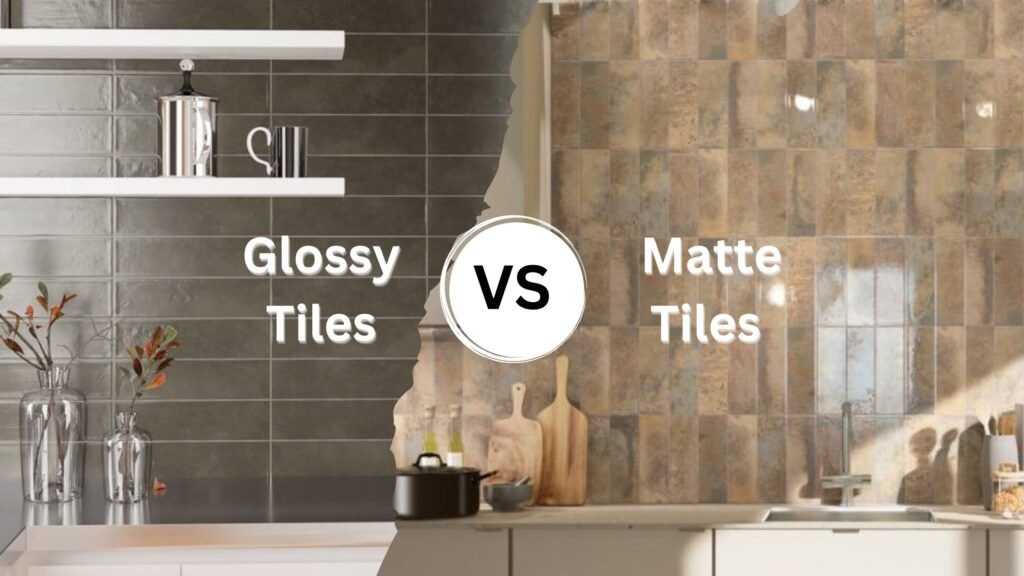
The Aesthetic Difference Between Matte and Glossy Tiles
Choosing between matte vs glossy tiles in India is one of the most consequential decisions a homeowner makes during a renovation or new build. The finish you select does not merely affect how a room looks on day one — it determines how that space performs through monsoon humidity, the daily cooking routines of an Indian kitchen, and the footfall of a joint family home with children and elderly members. Before understanding tile types before choosing a finish, it is worth knowing that finish selection alone can transform the feel of an entire floor plan. This guide cuts through the noise with expert, India-specific guidance on when to choose matte, when glossy works best, and how to blend both intelligently.
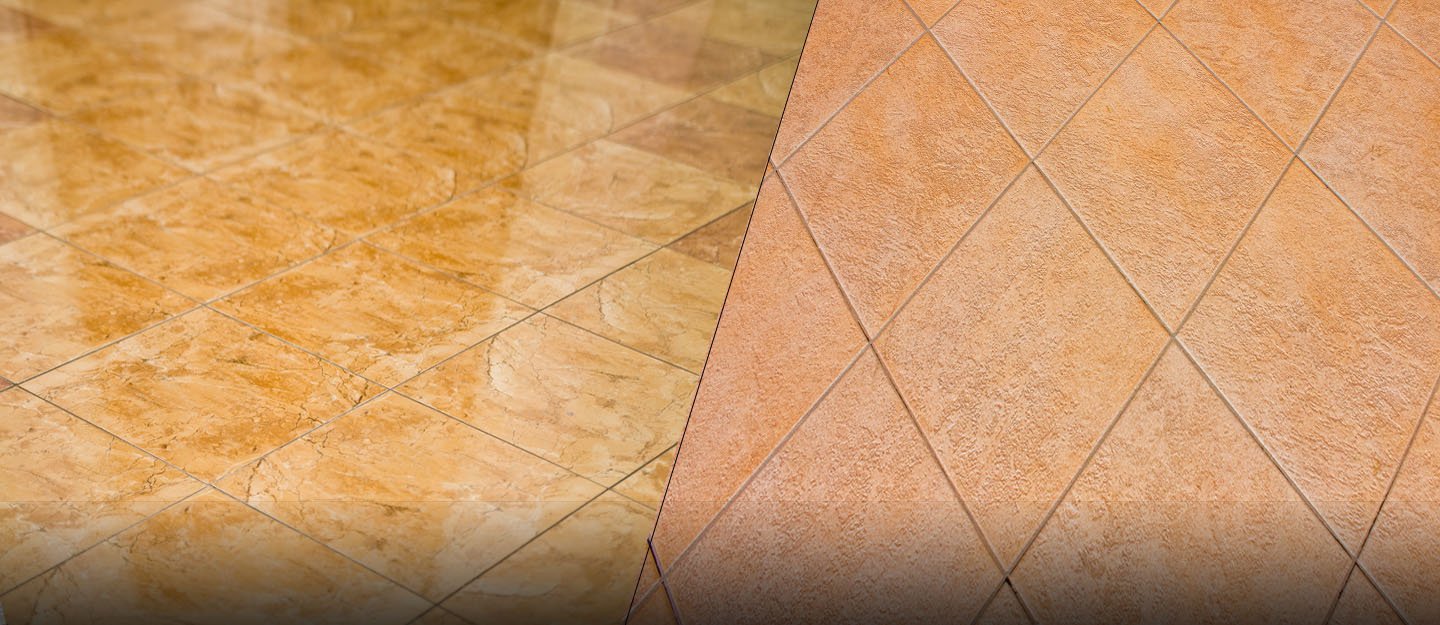
At their core, the two finishes interact with light in opposite ways. Glossy tiles carry a smooth, reflective surface that bounces light around a room, creating an impression of brightness and spatial depth. In a compact Mumbai apartment or a north-facing Delhi living room that lacks natural sunlight, a well-chosen glossy tile can genuinely make the space feel more open and airy.
Matte tiles, by contrast, have a micro-textured surface that diffuses rather than reflects light. The result is a softer, more grounded visual — warm, organic, and increasingly associated with high-end residential design. Think of the understated luxury of a stone-effect matte floor in a south Delhi farmhouse or a sage-toned matte wall tile in a Gurugram apartment bathroom. The colour palette often reads as richer and more complex on a matte surface, even though glossy tiles are traditionally associated with colour vibrancy.
Both finishes are available across ceramics, vitrified tiles, and large-format slabs, so the choice is never constrained by material alone.
Slip Resistance and Safety: A Critical Consideration for Indian Homes
This is where the matte vs glossy tiles India debate becomes most practical — and most important. Wet surfaces are a persistent reality in Indian homes: monsoon seasons that last four months, bathrooms used by young children, and elderly grandparents who form part of most joint families. Glossy tiles, while visually striking, have a low coefficient of friction when wet. On a bathroom floor or a balcony exposed to rain, a glossy tile presents a genuine safety risk.
Matte tiles carry a naturally higher slip resistance rating, typically achieving a PEI (Porcelain Enamel Institute) rating of IV or V and an R-value (slip resistance) of R10 or above. Most building authorities and architects specify matte or textured finishes for wet areas precisely for this reason.
In Indian homes specifically, the following environments should default to matte for safety:
- Bathroom floors, especially in homes with elderly residents or young children
- Kitchen floors, where oil and water splashes are routine
- Balcony and terrace areas exposed to monsoon rain
- Outdoor passages and stairways
Glossy tiles remain ideal for walls, splashbacks, and low-traffic dry areas where the safety trade-off does not apply.
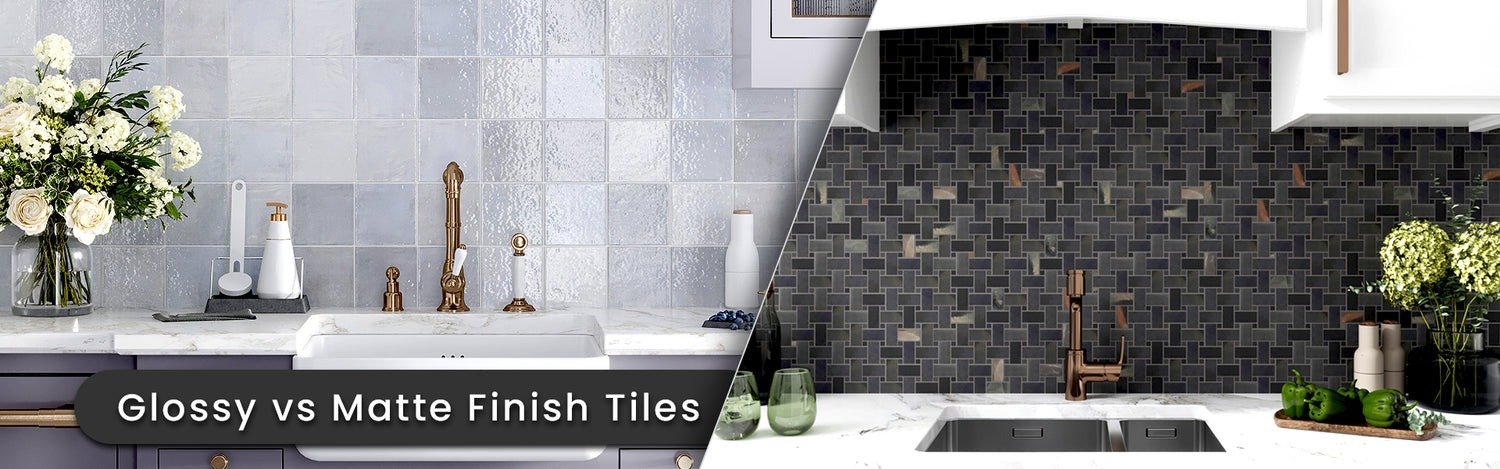
Maintenance and Cleaning: Which Finish Is Easier to Live With?
The maintenance question is one of the most misunderstood aspects of the matte vs glossy tiles India comparison. Conventional wisdom suggests glossy tiles are easier to clean because their smooth surface does not trap dirt. This is partially true — but the complete picture is more nuanced.
Glossy tiles show every fingerprint, water mark, and smudge immediately. In Indian kitchens, where oil aerosols from deep frying settle on every surface, a glossy kitchen floor can look grimy within hours of mopping. Anti-fingerprint tiles India buyers increasingly seek are almost exclusively matte or satin-finish, for this reason. Glossy tiles do clean off quickly when mopped, but they require frequent attention to maintain their showroom appearance.
Matte tiles are far more forgiving in day-to-day use. Dust, footprints, and light marks are far less visible between cleaning cycles — a meaningful advantage in Indian cities where construction dust and road pollution are constant. However, grout lines and textured matte surfaces can harbour staining if not sealed correctly, and oil-based stains require a proper cleaning agent rather than a simple mop-down.
For high-traffic Indian homes, matte tiles generally demand less frequent cleaning to look presentable, even if a deep clean takes slightly more effort than with glossy.
Room-by-Room Guide: Matte vs Glossy Tiles for Indian Homes
Bathroom
The bathroom presents the most layered decision. For floors, matte tiles for bathroom India use cases are strongly preferred — slip resistance is non-negotiable, and the warm, spa-like quality of a matte floor elevates the overall feel. For walls, the calculus shifts: a small bathroom with limited natural light benefits enormously from glossy or satin-finish wall tiles that bounce light and create the illusion of height and space. How tile finish trends are shaping bathrooms in 2026 reflects exactly this dual-finish approach, with matte floors and high-gloss accent walls becoming the signature of contemporary Indian bathroom design.
A well-executed bathroom typically uses a 60:40 or 70:30 split — matte-dominant flooring with glossy statement walls or feature panels.
Kitchen
Indian kitchens are among the most demanding environments for any tile finish. High heat, steam, oil splashes, and heavy foot traffic make this a space where functionality must lead. Matte tiles are the professional recommendation for kitchen floors without exception. On kitchen walls, glossy tiles remain popular — they clean easily with a single wipe, and their reflective quality keeps the kitchen feeling bright even in compact layouts. A matte floor paired with a full-height glossy wall tile is the most practical and visually sophisticated combination for an Indian kitchen.
Living Room
The living room is where the preference for glossy tiles for living room spaces remains strongest, particularly in apartments. A large-format glossy vitrified tile in a neutral tone — ivory, warm grey, or light beige — reflects ceiling lights and creates a seamless, expansive floor plane. For larger independent homes or villas, matte or satin-finish tiles provide a grounded, premium feel that reads as more considered. Matte and glossy finish ideas for modern living rooms offer a wide range of curated combinations at different price points.
Balcony and Outdoor Areas
The answer here is unambiguous: matte or textured tiles only. Indian balconies and terraces are exposed to monsoon rain, direct UV radiation, and temperature extremes. Glossy tiles become dangerously slippery when wet and fade unevenly under UV exposure over time. A matte, anti-skid exterior tile — ideally with an R11 or R12 slip resistance rating — is the responsible and lasting choice.
Indian Climate Considerations: Humidity, Monsoon, and Dust
The Indian climate creates conditions that most generic tile guides written for European or American audiences simply do not address. The monsoon months bring sustained high humidity, condensation on cool tile surfaces, and frequently wet floors throughout a home. This makes slip resistance a seasonal safety concern across many rooms, not just the bathroom.
Indian summers bring fine dust that settles on every horizontal surface. Matte tiles, particularly in mid-tones such as greige, taupe, or warm stone shades, camouflage this ambient dust far better than white or light-toned glossy tiles. In north Indian cities like Delhi and Gurugram, where dust storms and pollution are seasonal realities, this practical consideration often tips the balance toward matte for floors.
Coastal cities introduce salt-laden humidity that can affect grout and tile sealants over time. In these environments, fully vitrified tiles with low water absorption rates — available in both matte and glossy finishes — are essential. How finish choice interacts with tile colour becomes especially relevant in coastal and high-humidity climates, where certain colour-finish combinations hold up better over years of exposure.
What Architects and Interior Designers in India Prefer
The design community in India has moved decidedly toward matte and satin finishes for premium residential projects over the past five years. The reasons are both aesthetic and practical. Matte tiles photograph beautifully, support the warm-neutral colour palettes that dominate luxury interior design today, and do not show the wear that high-gloss floors accumulate over time in lived-in homes.
That said, architects do not dismiss glossy entirely. The nuanced recommendation from what finish architects recommend for high-end Indian homes is to use glossy strategically — as a wall finish to expand space, as a feature element in a double-height entrance lobby, or as a contrast material against matte floors. The deliberate juxtaposition of both finishes within a single space, handled with restraint, is itself a marker of considered design.
De Ceramica’s clients regularly receive this kind of layered guidance, combining finish selection with tile size, layout direction, and grout colour to arrive at a cohesive specification rather than isolated choices.
Cost Comparison: Is One Finish More Expensive?
In the entry and mid-range segments, matte and glossy tiles are largely priced equivalently — the finish adds negligible cost at the manufacturing stage. Price differentials emerge primarily at the premium and luxury end, where specific techniques such as full-body matte vitrified tiles, reactive-glaze effects, or high-sheen polished porcelain carry a premium reflecting the technical complexity involved.
Anti-fingerprint tiles India buyers seek — typically a nano-coated satin or soft-matte finish — do carry a modest premium over standard matte or glossy options, but the reduction in cleaning frequency justifies the investment over a home’s lifespan.
For most Indian homeowners working with a per-square-foot budget, finish type is not the primary cost driver. Size, material (ceramic vs. full-body vitrified), and brand tier determine price range more significantly than matte vs. glossy.
How De Ceramica Helps You Choose the Right Tile Finish
Selecting the correct finish is rarely a matter of personal taste alone — it requires an understanding of the specific room, its light conditions, the household’s lifestyle, and the overall design intent. At De Ceramica, the consultative process begins with exactly these questions before a single tile is shown to a client.
The team at De Ceramica curates a premium range of tile finishes across the De Ceramica tile collections, with options in full-body matte vitrified, high-gloss porcelain, satin, and anti-fingerprint nano-coated finishes. Whether you are specifying tiles for a 3 BHK apartment in Gurugram, a luxury villa in DLF, or a standalone bungalow, De Ceramica’s experienced consultants bring the same depth of expertise that architects and interior designers across Delhi NCR rely on.
Frequently Asked Questions
Which is better for bathroom floors in India — matte or glossy tiles?
Matte tiles are strongly recommended for bathroom floors in India. The higher slip resistance of matte finishes — typically R10 or above — is essential given wet conditions during regular use and monsoon humidity. Glossy tiles are better suited to bathroom walls, where their light-reflective quality adds brightness without the safety risk.
Are matte tiles harder to clean than glossy tiles?
Not significantly, and in many Indian home conditions matte tiles are actually more forgiving. They do not show fingerprints, water marks, or dust between cleaning sessions the way glossy tiles do. Textured matte surfaces can require a slightly more thorough mopping technique to prevent grout staining, but for day-to-day maintenance, most homeowners find matte tiles less demanding.
Can you mix matte and glossy tiles in the same room?
Yes, and many premium Indian interiors do exactly this. A common and effective approach is to use matte tiles for flooring and glossy or satin tiles for walls. The contrast adds visual depth and allows each finish to perform its functional role — slip resistance on the floor, light reflection on the walls. A 60:40 or 70:30 ratio, matte-dominant, tends to work well in most rooms.
Which tile finish is better for Indian kitchens?
Matte tiles are the preferred finish for Indian kitchen floors, given the frequency of oil splashes, water spills, and heavy foot traffic. For kitchen walls, glossy tiles remain practical — they are easy to wipe clean and help keep the space feeling bright. A combination of matte flooring and glossy wall tiles is the most functional and widely recommended specification for Indian kitchens.
Do glossy tiles make a room look bigger?
Yes, glossy tiles do make a room appear larger and brighter. Their reflective surface bounces natural and artificial light around the space, which is particularly effective in compact apartments or rooms with limited window area. This is why glossy tiles remain popular for small bathroom walls and apartment living rooms in Indian cities where floor plates are often modest.
Which tile finish do interior designers in India recommend?
Most interior designers working on premium Indian residential projects favour matte or satin finishes for floors and high-traffic areas, with glossy used selectively for walls, feature panels, or areas where light amplification is needed. The consensus has shifted toward matte in recent years — driven by the move toward warm, natural palettes in luxury interiors and the practical advantages matte offers in busy households.
Speak with a Tile Finish Expert at De Ceramica
The matte vs glossy tiles India decision is most reliably made in a showroom, where you can assess samples under natural and artificial light conditions, hold finishes against each other, and discuss your specific home environment with someone who has guided hundreds of similar projects.
De Ceramica welcomes clients at its Gurugram showroom:
A-511, Sushant Lok Phase 1, Gurugram
Phone: +91 85880 09989
The team is available to guide you through finish selection across bathroom, kitchen, living room, and outdoor specifications — drawing on the same expertise that architects and interior designers across Delhi NCR trust for their premium residential projects.