

Call Us Let's Talk Let's Talk

Luxury Bathroom Renovation Guide: Step-by-Step Planning for Indian Homes (2026)

Luxury bathroom design ideas 2026 planning your renovation the right way

A luxury bathroom renovation isn’t just about picking a beautiful bathtub or striking tile. It’s a sequence of decisions that each depend on the ones before them. Get the order wrong, and you end up with expensive rework — tiles laid before the heating system is planned, or a vanity chosen before the plumbing layout is finalised.

This guide walks through the actual renovation process, stage by stage. You’ll learn what to plan first, what depends on what, and where most Indian homeowners run into avoidable delays or costly changes mid-project.

Start with the layout not the products

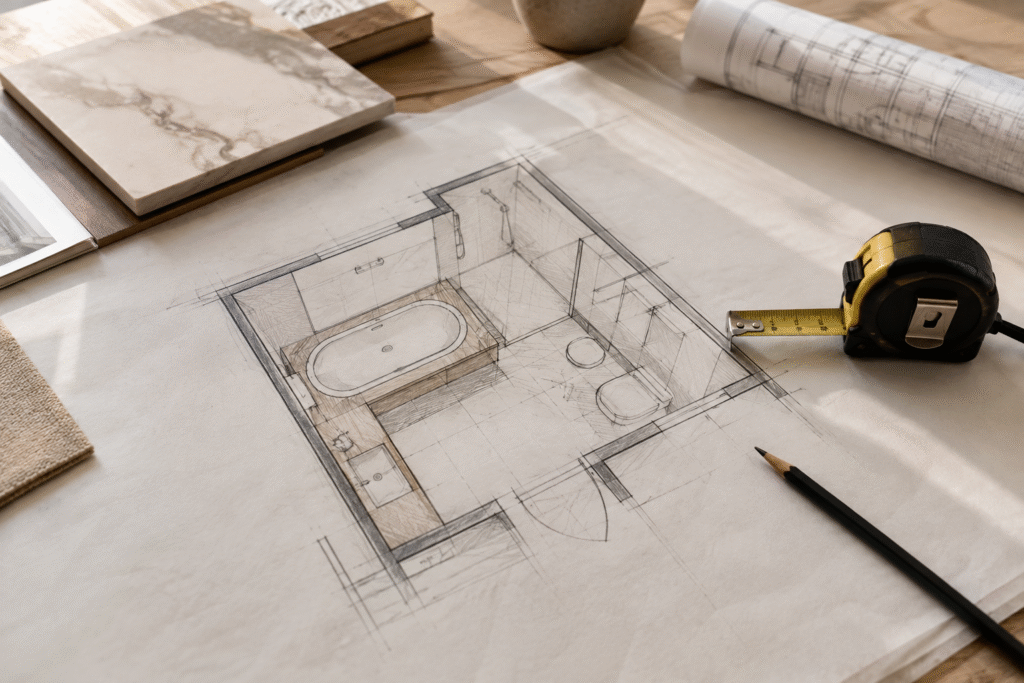
Architect’s desk featuring a hand-drawn bathroom floor plan, measuring tape, pencil, tile samples, and a rolled blueprint, illuminated by soft natural light in warm neutral tones.

It’s tempting to begin by browsing tiles and bathtubs. But the layout should come first. Where the shower, vanity, and toilet sit determines your plumbing plan, your electrical points, and ultimately which products will even fit. Changing the layout after you’ve chosen fittings almost always means rework — so this is the one step worth spending real time on before deciding anything else.

If you’re working with an architect or interior designer, involve them fully at this stage. Planning independently? Sketch the layout with rough dimensions. Confirm door swing, circulation space, and plumbing wall locations before you move forward.

Architect’s desk featuring a hand-drawn bathroom floor plan, measuring tape, pencil, tile samples, and a rolled blueprint, illuminated by soft natural light in warm neutral tones.

Choosing materials in the right order


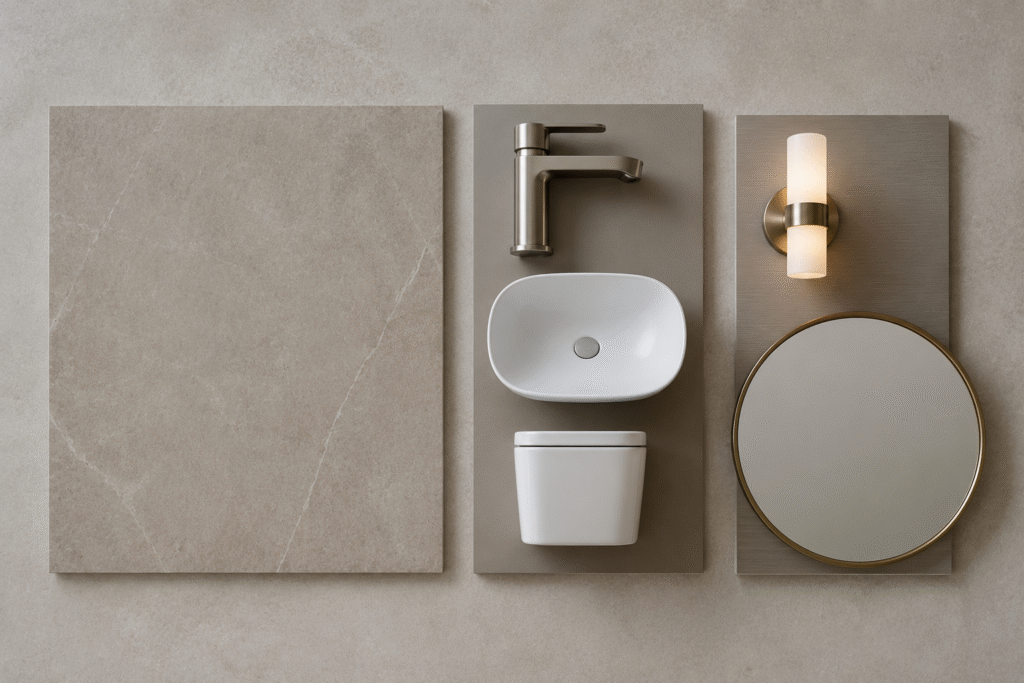
Tiles set the tone for everything else in the bathroom — colour, finish, and format influence which fittings will look coordinated rather than mismatched. Choose your floor and wall tiles before finalising fixtures. It’s far easier to match a bathtub or vanity to an existing tile than the reverse.

Once you’ve chosen tiles, select your bathtub or shower system, sanitaryware, and faucets in finishes that complement the tile palette. Matte black, brushed brass, and chrome all read differently against different tile tones. Confirm this in person rather than relying on a catalogue.

Lighting, mirrors, and accessories are the easiest to change later and the cheapest to get wrong. That’s exactly why you should finalise them only once the bigger, harder-to-change decisions are locked in.

Choosing materials in the right order

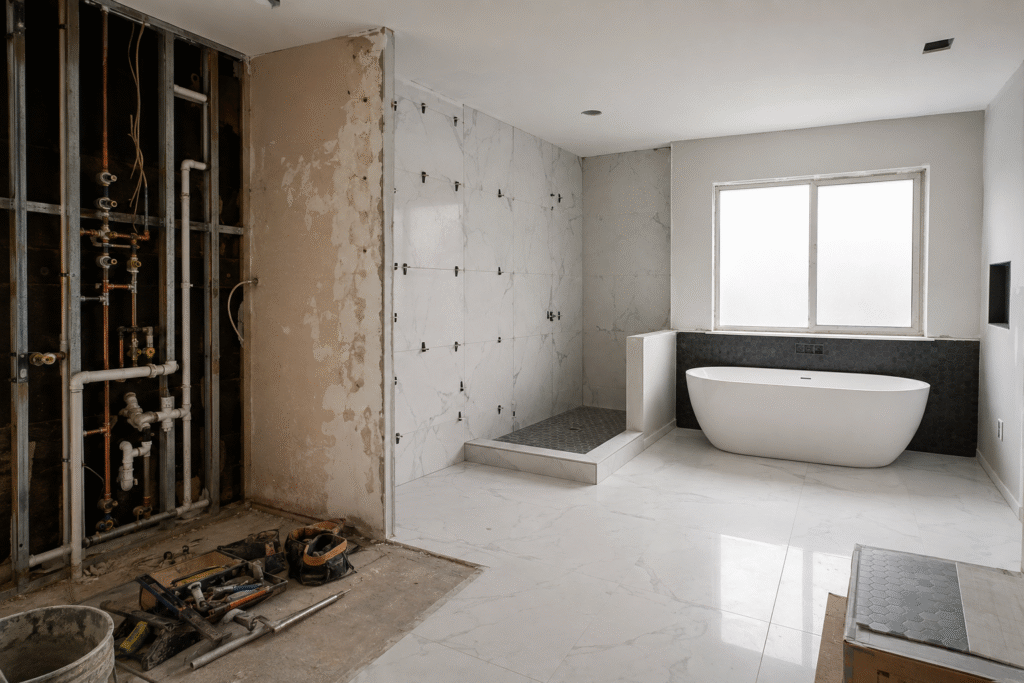
Wide-angle view of a bathroom renovation showing exposed plumbing and construction tools on the left, a partially tiled shower area in the center, and a nearly finished section with marble-look flooring and a freestanding bathtub on the right.

The renovation timeline stage by stage

Stage What Happens Typical Duration
Planning & design Layout, material selection, fittings & fixtures finalised 2–4 weeks
Demolition Removal of existing tiles, fittings, and fixtures 2–4 days
Plumbing & electrical Rerouting pipes, wiring for lighting/heated flooring 5–8 days
Waterproofing Membrane application and curing before tiling 3–5 days (incl. curing)
Tiling & surfaces Floor, wall, and shower area tile installation 7–12 days
Fittings & fixtures Bathtub, sanitaryware, faucets, vanity installation 4–6 days
Finishing & styling Lighting, mirrors, accessories, final inspection 2–3 days

Timelines are indicative and vary by bathroom size, scope of work, and contractor availability. Waterproofing curing time in particular should never be rushed, regardless of project pressure.

Common planning mistakes that cause delays

  • Choosing fittings before confirming the plumbing layout, resulting in mismatched rough-in positions.
  • Rushing waterproofing curing time to keep the project on schedule — a mistake that causes leaks and rework months later.
  • Ordering an insufficient tile quantity for the batch, which leads to visible colour mismatches when you order a second batch.
  • Finalising underfloor heating or a concealed cistern after tiling has already begun, rather than planning for it from the start.
  • Underestimating lead times for imported tiles or fittings, which can take several weeks to arrive.

Choosing a contractor you can trust

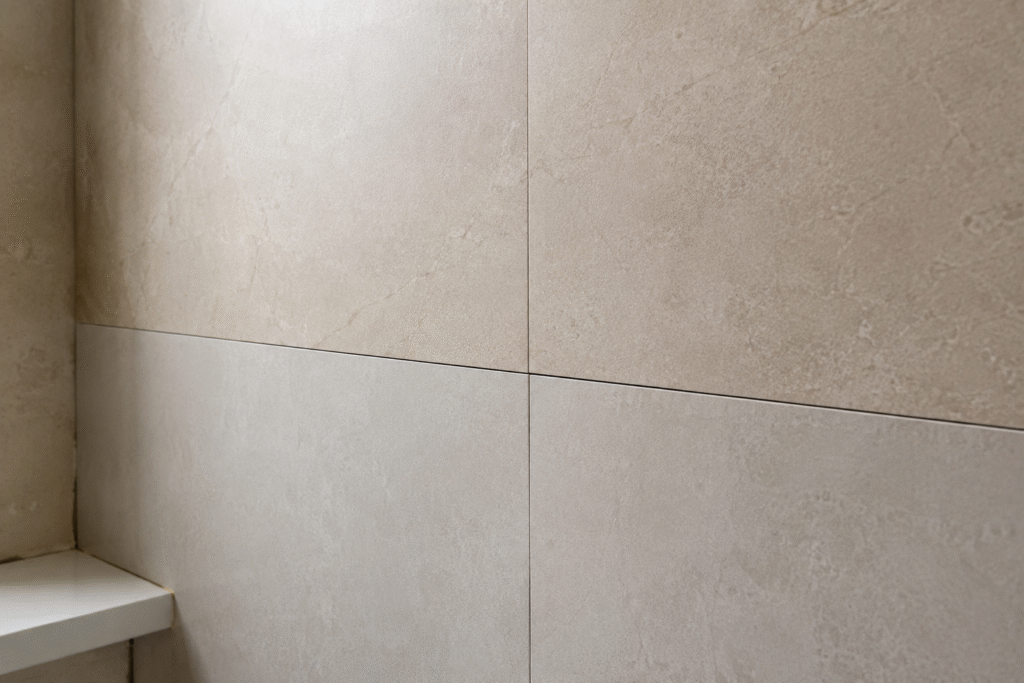
A luxury renovation is only as good as the hands executing it. Before committing to a contractor, ask to see photos of at least two or three completed bathroom projects — not just living rooms or kitchens, since bathroom work involves waterproofing and plumbing skills that don’t always carry over from general renovation experience. Confirm they’re comfortable working with large-format tiles specifically, since installation technique differs from smaller-format tiles and a contractor unfamiliar with it can produce visible lippage or uneven grout lines.

Ask for a written scope of work that breaks down each stage — demolition, plumbing, waterproofing, tiling, fittings — with a timeline and payment schedule tied to milestones, not just a lump sum. This protects you if the project runs long and gives you a clear reference point if disputes come up about what was or wasn’t included in the original quote.

Choosing a contractor you can trust

Flat-lay of curated bathroom material samples arranged in three sections: large-format marble-look tile, a brass faucet with white sanitaryware, and a wall light paired with a round mirror, photographed in soft neutral studio lighting.

Budgeting realistically for a luxury renovation

Luxury doesn’t have to mean unlimited budget. It does mean prioritising where the spend actually shows. Invest properly in tiles and waterproofing, since both are expensive and disruptive to redo. Fittings and accessories offer more room to phase spending — you can add a premium faucet later without touching the tile work, but discovering a waterproofing shortcut after tiling means starting over.

Get quotes for the full scope before committing to any single element. Build in a contingency of roughly 10–15% for unexpected structural or plumbing issues — common in older Indian homes being renovated for the first time in years.

So where should you begin?

De Ceramica is a trusted destination for Geberit’s concealed cistern systems and sanitaryware in Gurgaon, alongside the wider tile and bathroom fittings range needed to plan a complete renovation. Our showroom lets you see Duofix and Omega frames, Sigma flush plate finishes, and Geberit sanitaryware in person before you decide.

With more than 21 years in the industry, our team helps homeowners, architects, and interior designers choose the right Geberit system for their specific wall construction and design — and can coordinate installation planning alongside your tiling and fittings project.

See it all at De Ceramica, Gurgaon

Sequencing a renovation properly starts with seeing your material options together, not in isolation. At De Ceramica’s showroom, our team helps you plan tiles, sanitaryware, fittings, and finishes as a coordinated package — in the right order — rather than making decisions room by room without a clear plan.

Our team brings more than 21 years in the industry. We work closely with homeowners, architects, and interior designers to sequence renovation decisions correctly, helping you avoid the rework and delays that come from choosing products out of order.

Visit us at A-511, Sushant Lok Phase 1, opposite IFFCO Chowk Metro Station, Gurugram, or book a free design consultation and we’ll help you plan tiling for your villa from foyer to poolside.

Frequently asked questions

Q.1 What should I plan first in a bathroom renovation?

Start with the layout — where the shower, vanity, and toilet will sit — before choosing any products. The layout determines your plumbing and electrical plan, and changing it after fittings are selected almost always causes expensive rework.

Q.2 How long does a luxury bathroom renovation take in India?

A typical renovation runs 4–6 weeks from planning through to final styling, though this varies by bathroom size and scope. Waterproofing curing time and any imported material lead times are the two factors most likely to extend this timeline.

Q.3 Should I choose tiles or fittings first?

Choose tiles first. It’s easier to match a bathtub, vanity, or faucet finish to an existing tile palette than to select tiles around fittings you’ve already committed to — tiles set the overall tone the rest of the bathroom is built around.

How can we help you?