

Call Us Let's Talk Let's Talk

Imported Tiles Buying Guide India 2026: What to Check Before You Buy

Imported Tiles Buying Guide India 2026 What to check before you buy quality, specifications & hidden costs

Imported tiles cover a lot more ground than most buyers realise — Italy, Spain, Turkey, and Portugal each bring different pricing, design strengths, and quality standards to the Indian market. Beyond choosing a country of origin, buying imported tiles well means knowing what actually separates a genuine, well-sourced product from a mislabelled or poorly imported one. This guide covers exactly that.

Why imported tiles cost what they do

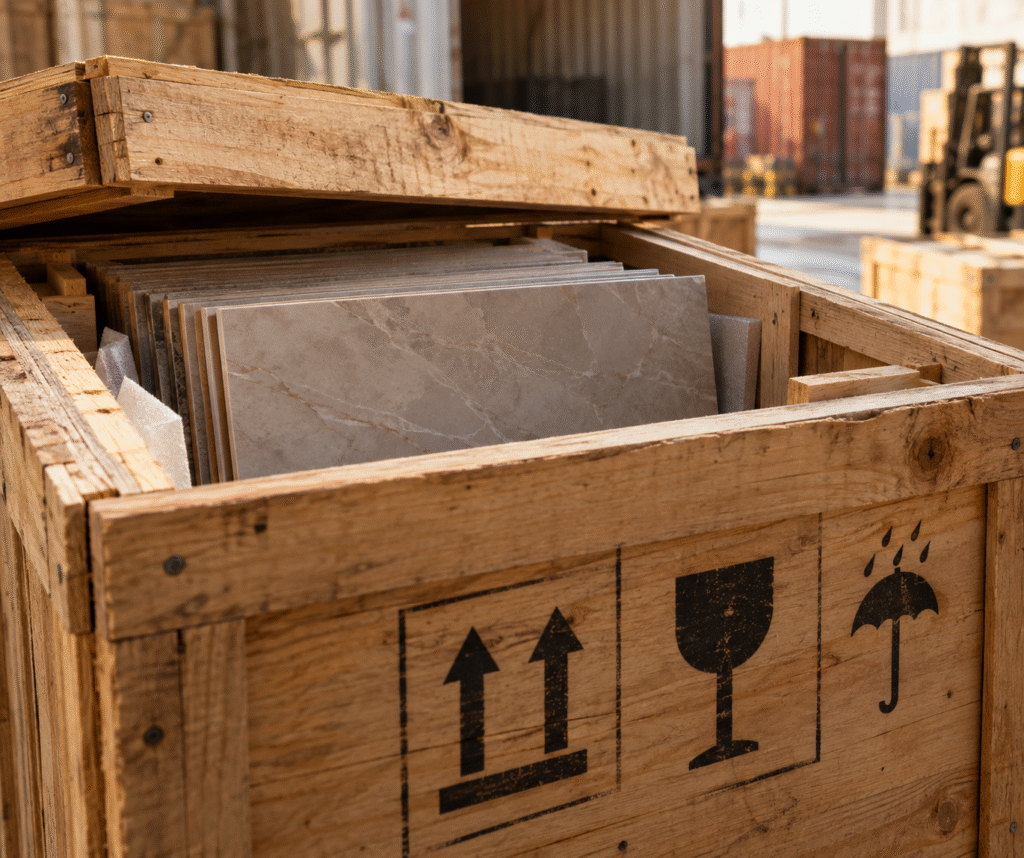
Wooden shipping crate with handling marks, partially opened to reveal stacked imported tiles inside a warehouse.

Imported tile pricing reflects more than the tile itself. Import duty, freight, and handling all add to the base manufacturing cost before a tile reaches an Indian showroom — which is part of why imported Italian or Spanish tiles cost meaningfully more than comparable Indian vitrified tiles, even when the visual difference is subtle. Understanding this helps set realistic expectations: a genuinely imported tile at an unusually low price is a signal worth investigating rather than a bargain to celebrate.

Wooden shipping crate with handling marks, partially opened to reveal stacked imported tiles inside a warehouse.

Import duty and why it's already baked into the price

A common question buyers ask is whether they’ll be charged import duty separately when purchasing imported tiles in India. The answer, almost always, is no — import duty, customs clearance, and freight costs are calculated and paid by the importer or dealer before the tile ever reaches a showroom floor, and these costs are built into the retail price you see.

This matters for two reasons. First, it explains why a genuinely imported tile can never realistically match the price of a similar-looking domestic vitrified tile — the cost structure is fundamentally different before design or brand even enters the picture. Second, it’s a useful authenticity check: if a seller offers to “waive the import duty” or implies you’re getting a special deal by avoiding these costs, that’s a signal the tile likely isn’t genuinely imported through proper channels, since a legitimate dealer has no ability to selectively skip duties already paid at the border.

Import duty and why it's already baked into the price

Flat-lay of customs paperwork, calculator, and tile samples on a wooden desk, representing tile import costs and documentation.

Which countries import tiles into India and what they're known for

Origin Known For Price Tier (India 2026)
Italy Design leadership, marble-look porcelain, large formats ₹150 – ₹1,200+ per sq ft
Spain Value-driven quality, strong mid-range designer options ₹120 – ₹800 per sq ft
Turkey Competitive pricing, growing design quality ₹90 – ₹400 per sq ft
Portugal Ceramic craftsmanship, decorative and patterned tiles ₹110 – ₹500 per sq ft

Prices are indicative for 2026 and vary by collection, finish, and dealer. Import duties and logistics costs are typically reflected in the final retail price rather than charged separately to the buyer.

How to verify a tile is genuinely imported

  • Ask for the manufacturer’s name and collection name specifically — a legitimate dealer will provide both without hesitation.
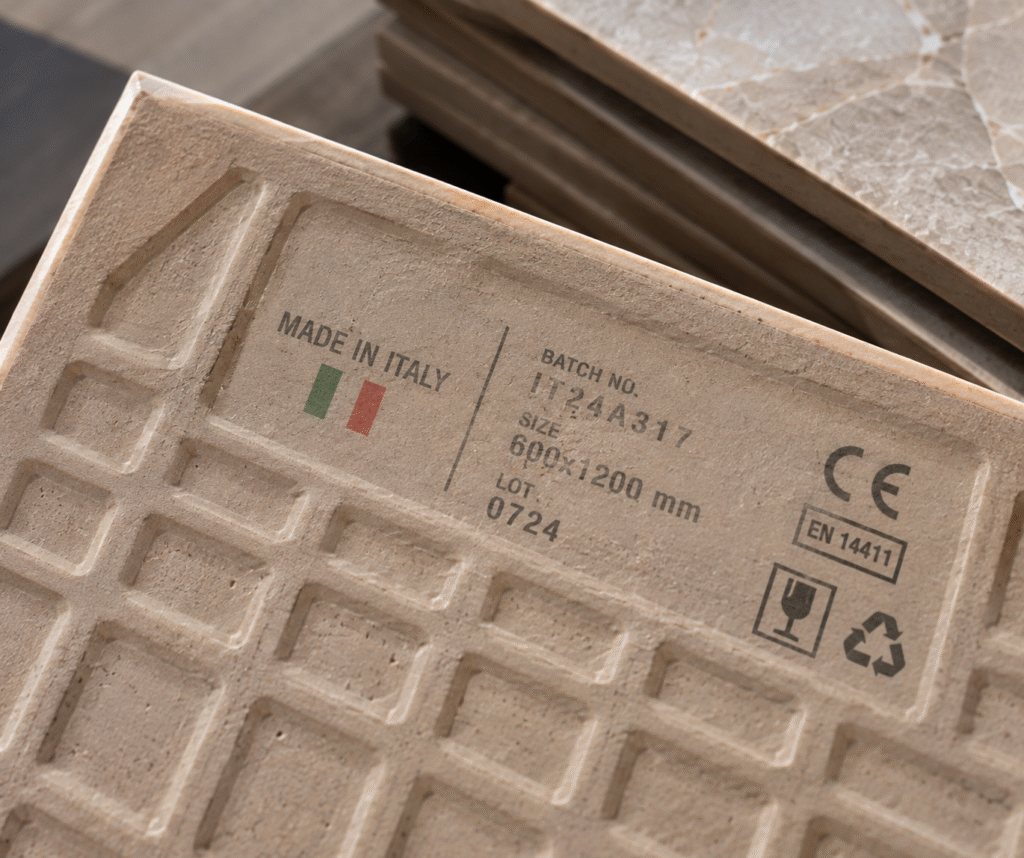
  • Check the box or carton for country-of-origin labelling and manufacturer branding, not just a generic sticker.
  • Request the batch number, which allows you to verify consistent shade and quality across your full order.
  • Be cautious of tiles marketed as “Italian-style” or “Italian-finish” — these are domestically manufactured tiles designed to look imported, not genuine imports, and should be priced accordingly.

Quality checks specific to imported tiles

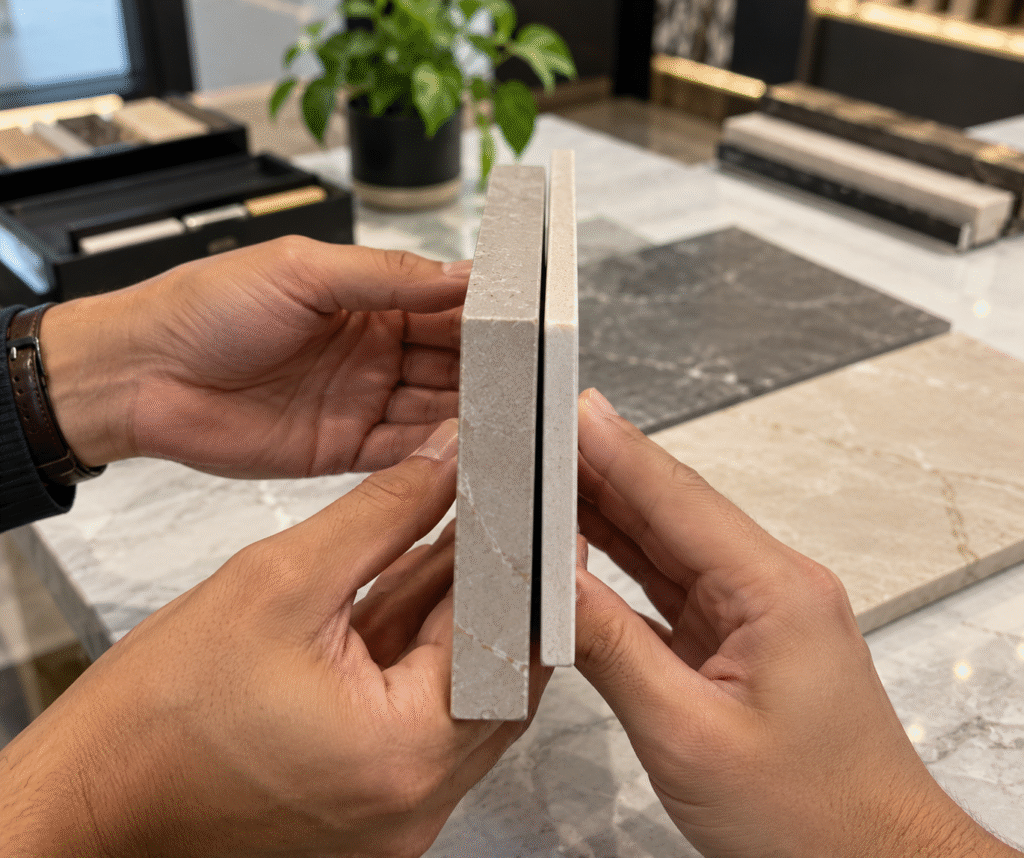
Imported tiles generally undergo stricter manufacturing quality control than budget domestic options, but verifying quality in person remains essential. Check for consistent thickness across multiple tiles from the same box, examine edges for chips or warping, and confirm the finish (matte, glossy, textured) matches what was shown in photographs or samples — imported tile finishes can vary meaningfully between similar-looking collections.

Rectified edges — precisely cut, perfectly square edges — are a hallmark of higher-quality imported tiles and allow for minimal grout lines. Non-rectified tiles require wider grout joints to accommodate slight size variations, which is worth checking before committing to a large-format installation.

Quality checks specific to imported tiles

Import lead times and planning your project around them

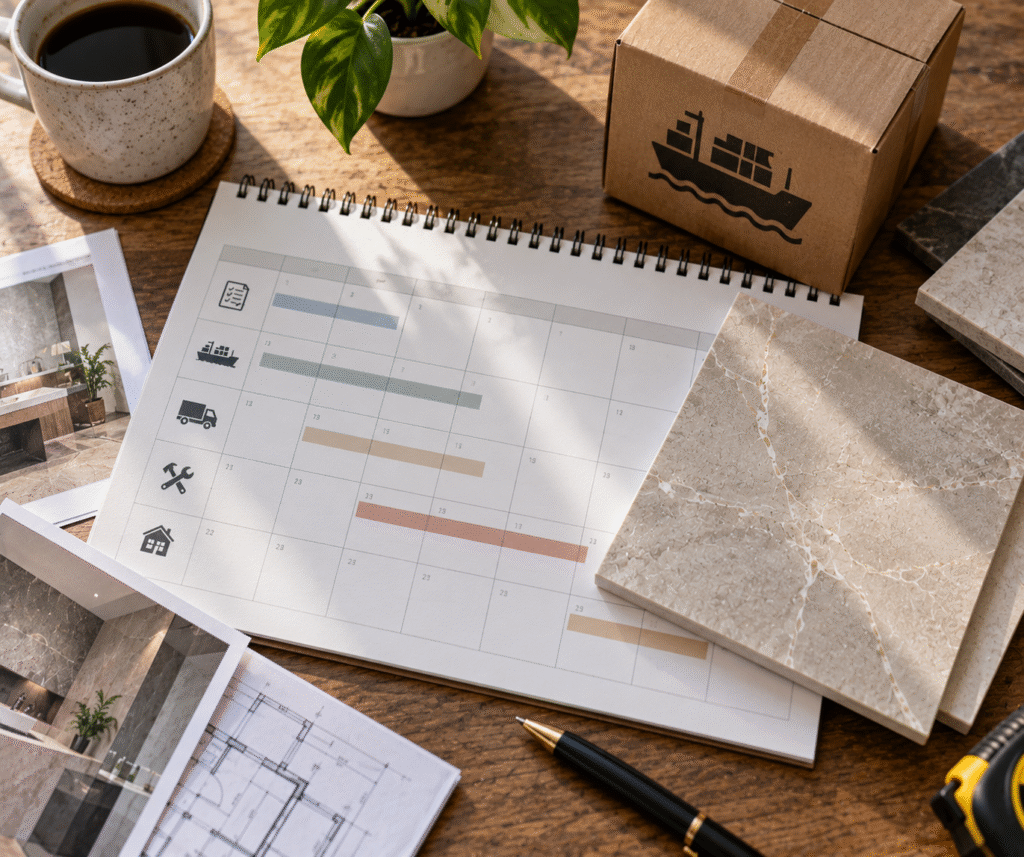
Unlike domestic tiles, imported collections often need to be ordered in advance, with lead times ranging from a few weeks to a couple of months depending on the collection’s availability and whether it needs to be shipped specifically for your order. This is one of the most commonly underestimated factors in renovation planning — confirm lead times with your dealer early, and build them into your project timeline rather than assuming imported tiles will be available immediately like a domestic product.

  • Ask your dealer for a realistic lead time before finalising your renovation schedule.
  • Order slightly more tile than your calculated requirement to account for cutting waste and future repairs, since re-ordering an imported batch later may not match exactly.
  • Confirm whether the specific collection is held in local stock or needs to be ordered from the manufacturer.

So where should you begin?

Start by deciding which country of origin actually fits your project’s design intent and budget, since that single choice narrows the entire search — Italy for design leadership and large formats, Spain for strong mid-range value, Turkey for competitive pricing, or Portugal for decorative and patterned work. Trying to compare all four equally without a priority is where most buyers get stuck.

Once you’ve picked a direction, verify before you commit: ask for the manufacturer name, collection name, and batch number rather than taking a seller’s word that a tile is genuinely imported. A few minutes of verification upfront saves you from a costly mismatch discovered only after installation, when a second batch doesn’t quite match the first.

See it all at De Ceramica, Gurgaon

Verifying an imported tile’s authenticity and quality is far easier in person than online, where photos and listings can’t confirm sourcing or batch consistency. At De Ceramica’s showroom, our imported tile range spans genuine Italian, Spanish, and other international collections, each sourced directly with verifiable manufacturer documentation.

With more than 21 years in the industry, our team helps homeowners, architects, and interior designers navigate origin, pricing, and lead-time planning for imported tile projects — not just selling from a catalogue, but helping you buy with confidence.

Visit us at A-511, Sushant Lok Phase 1, opposite IFFCO Chowk Metro Station, Gurugram, or book a free design consultation and we’ll help you plan tiling for your villa from foyer to poolside.

Frequently asked questions

Q.1 Are imported tiles always better quality than Indian tiles?

Not automatically — quality depends on the specific manufacturer and collection, not just country of origin. However, imported tiles from established European manufacturers generally offer stronger design differentiation and more consistent large-batch quality, which is where much of the price premium is justified.

Q.2 How can I tell if a tile is genuinely imported and not a domestic copy?

Ask for the manufacturer’s name, collection name, and batch number, and check the box for country-of-origin labelling. Be wary of tiles marketed with vague terms like “Italian-style” or “Italian-finish” without a specific manufacturer name attached — these are usually domestic products designed to resemble imported ones.

Q.3 How far in advance should I order imported tiles for a renovation?

Confirm lead times with your dealer as early as possible, since imported collections can take anywhere from a few weeks to a couple of months depending on stock availability. Building this into your renovation timeline early avoids project delays later.

How can we help you?