
Concealed Cistern & Wall-Hung Toilets: Why Architects Are Specifying Them Now
Concealed Cistern India: Key Differences, Pros & Cons
f you’re researching a concealed cistern India renovation, start by walking into any newly designed bathroom in Gurgaon or Delhi NCR. You’ll notice something missing: the toilet tank. No bulky ceramic cistern sitting behind the seat, no visible pipework, no awkward gap to clean around. Architects now specify a concealed cistern and wall-hung toilet as the default, not the upgrade. This guide explains why, and what actually goes on behind that wall.
Here’s the part most homeowners don’t know: a concealed cistern and a wall-hung toilet are two separate products that work as one system. The cistern is a flush tank hidden inside the wall, fed by a steel in-wall frame that also holds the toilet bowl in place. The wall-hung toilet is simply the ceramic pan, bolted to that frame instead of sitting on the floor. Together, they create the clean, floating look architects want, and the tank stays fully serviceable through a small access panel behind the flush plate.
What is a concealed cistern?
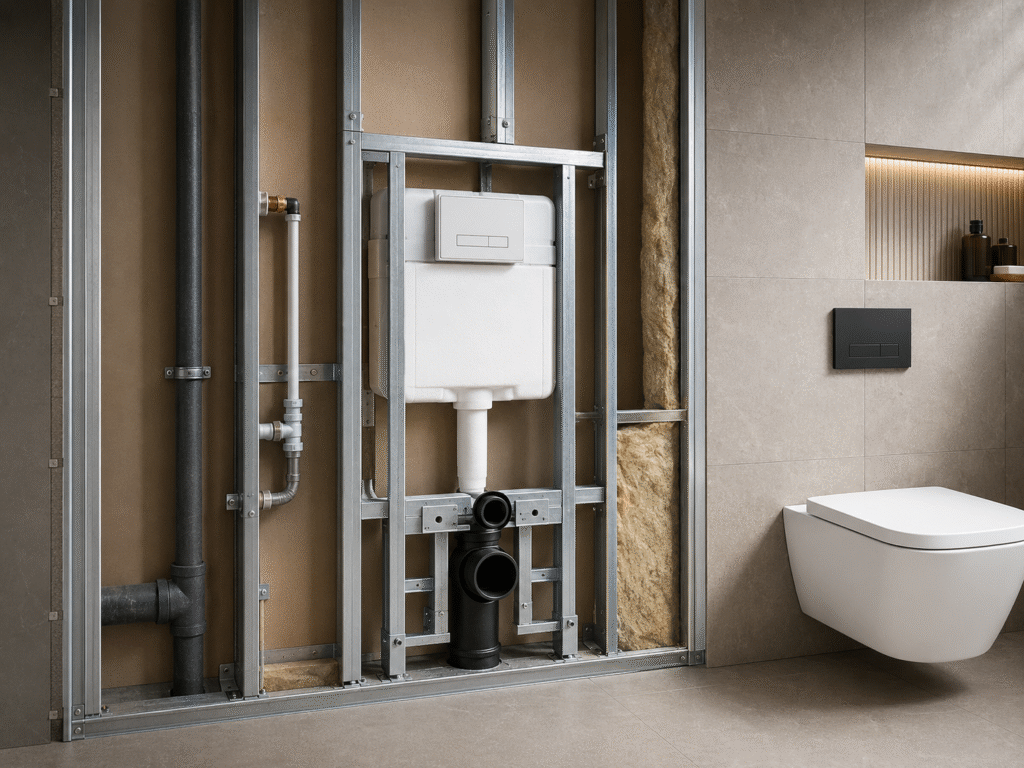
A concealed cistern is a flush tank built into a steel or plastic frame that sits inside a stud wall or a false wall built in front of masonry. Only the flush plate shows on the finished wall — everything else, the tank, the pipework, the flush valve, sits hidden. Premium brands like Geberit and Viega engineer these frames to also support the full weight of the wall-hung toilet and a seated adult, so the system needs a properly built wall, not just a thin partition. This frame-and-tank combination is the core of every concealed cistern India installation, whatever brand or finish you eventually choose.
What is a wall-hung toilet?
A wall-hung toilet is a ceramic pan that bolts directly onto the concealed cistern’s frame, with no pedestal touching the floor. The floor stays completely clear underneath, which is what gives the bathroom its clean, floating look. It also makes the floor far easier to mop, since there’s no base to trap grime or dust. The trade-off is that a wall-hung toilet can only go where a concealed cistern frame has already gone in.
What is a wall-hung toilet?

Concealed + wall-hung vs traditional floor-mounted: side-by-side comparison
| Factor | Concealed Cistern + Wall-Hung Toilet | Traditional Floor-Mounted Toilet |
|---|---|---|
| Floor space | Fully clear underneath | Pedestal takes up floor area |
| Cleaning | Easy — no base to trap dirt | Harder — grime collects around the base |
| Wall requirement | Needs a stud wall or built-out frame wall | Works with any standard wall |
| Installation | More involved, needs planning at construction stage | Simple, works in most retrofits |
| Access for repairs | Through a small panel behind the flush plate | Direct access, tank is visible |
| Aesthetic | Minimal, hotel-style, floating look | Standard, visible tank and base |
| Indicative cost (India) | ₹35,000 – ₹90,000+ for a complete branded system | ₹8,000 – ₹30,000 for tank + pan |
Prices are indicative for 2026. They vary by brand, frame height and flush plate finish. For an exact quote, see the system in person.
Why architects are specifying them now
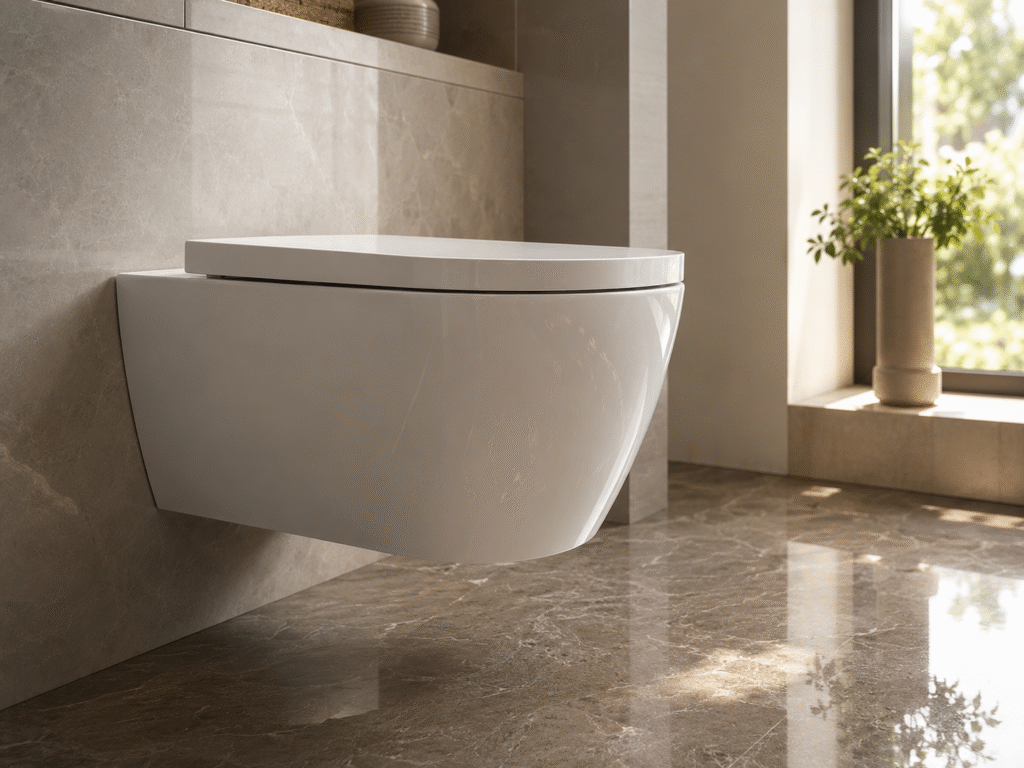
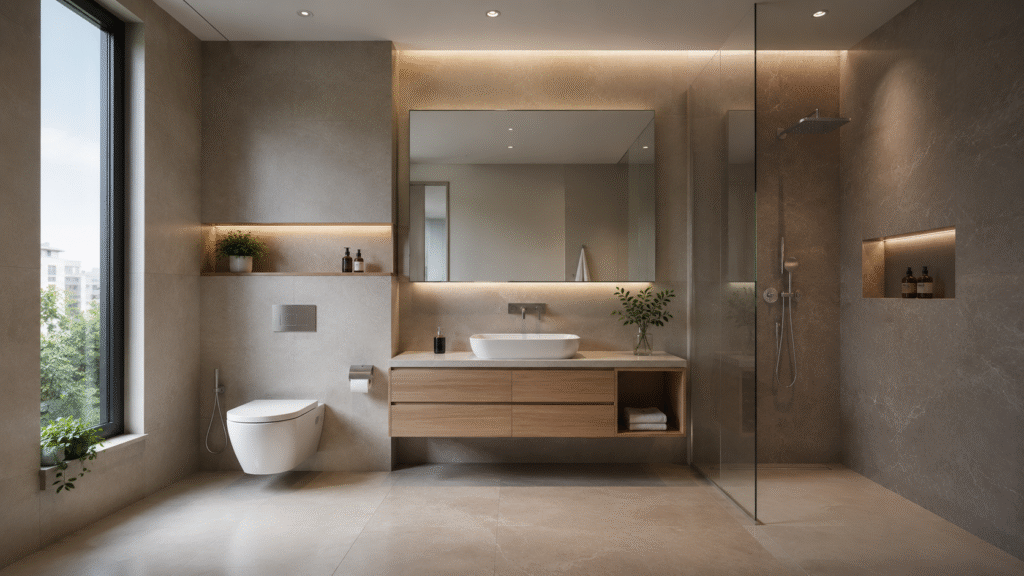
Three things drive this shift. First, the floating look reads as premium and hotel-grade, which is exactly the aesthetic most luxury renovations chase today. Second, small and mid-size Indian bathrooms benefit directly from the reclaimed floor space — a wall-hung toilet visually and physically opens up a tight room. Third, cleaning ease matters more than it used to: a floor with nothing to clean around is a genuine selling point for buyers and a genuine convenience for households with domestic help managing daily upkeep. Add in the clean lines that photograph well for real estate listings, and it’s easy to see why the concealed cistern has moved from luxury feature to standard spec.
Installation what your contractor needs to know
A concealed cistern India installation asks for more upfront planning than a standard toilet. The frame needs a stud wall, or a false wall built out in front of existing masonry, engineered to carry the combined weight of the frame, the pan and a seated adult — Geberit and Viega frames are typically rated well beyond this, but the wall itself has to be built correctly. Water supply and waste pipework also need to route inside that wall before it closes up, which is why concealed cisterns are far easier to plan at construction or major renovation stage than to retrofit into a finished bathroom. If you’re renovating, loop in your architect and plumber before tiling begins.
Installation what your contractor needs to know
Maintenance and repairs: is it harder to fix?
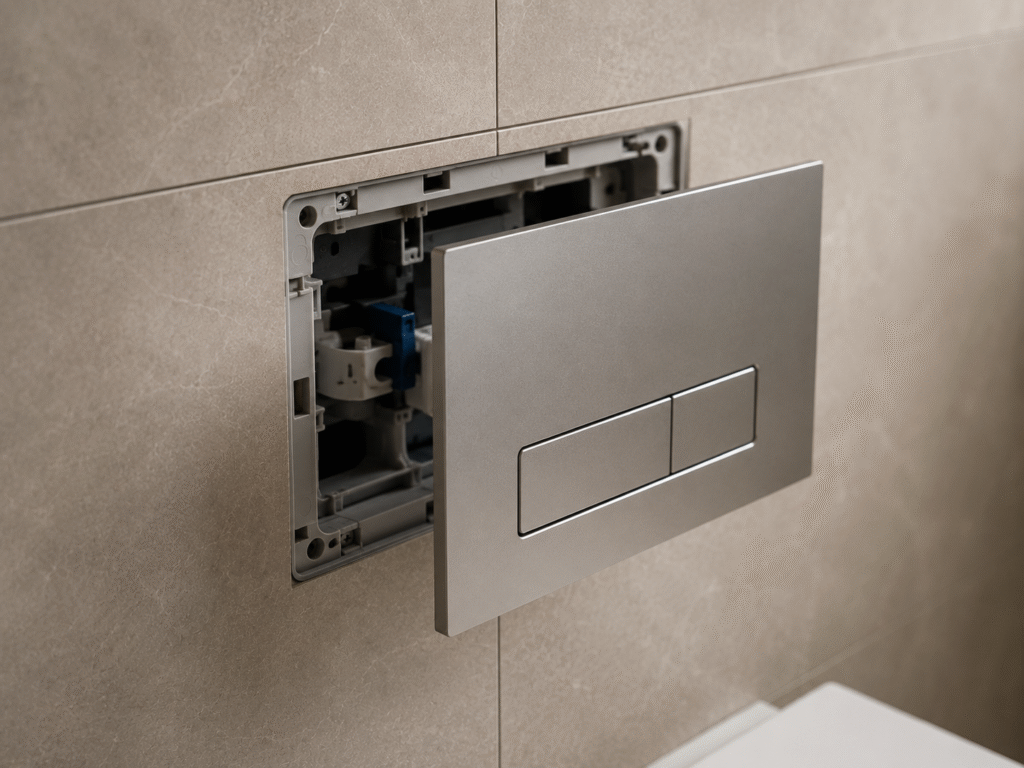
This is the most common worry, and it’s largely unfounded. Every concealed cistern frame includes an access panel directly behind the flush plate, so a plumber can reach the flush valve, fill valve and internal components without breaking any tile. Both Geberit and Viega design their frames for decades of service life, and the flush plate itself is the only part you’ll ever touch day to day. The one real requirement: don’t tile over the access panel, and make sure whoever installs it knows exactly where that panel needs to sit.
So is it right for your bathroom?
Choose a concealed cistern and wall-hung toilet if you’re doing new construction or a full bathroom renovation, want the hotel-style floating look, and value the easier cleaning it brings. Stick with a traditional floor-mounted toilet if you’re doing a quick fix-up on an existing wall that can’t be opened up, or if budget is the primary constraint. For most architect-led renovations in Gurgaon and Delhi NCR today, the concealed system has become the starting assumption rather than the exception.
See Geberit and Viega concealed cisterns at De Ceramica, Gurgaon
The easiest way to decide between brands and flush plate finishes is to see both systems installed side by side. At De Ceramica, our plumbing collection brings Geberit and Viega concealed cisterns, frames and flush plates together under one roof, so you can compare finish, actuation style and price instead of guessing from a catalogue.
With more than 21 years in the industry, our team offers personalised design guidance and coordinated installation support across Gurgaon and the wider Delhi NCR region — helping architects and homeowners plan the wall build-out, pipework routing and frame selection correctly from the start.
Visit us at A-511, Sushant Lok Phase 1, opposite IFFCO Chowk Metro Station, Gurugram, or book a free design consultation and we will help you choose the right concealed cistern system for your home.
Frequently asked questions
Q.1 Can a concealed cistern be installed in an existing bathroom?
Yes, but it usually means opening up the wall or building a false wall in front of it, since the frame and pipework need space inside the wall. It’s far simpler to plan during a full renovation than to retrofit into a finished bathroom.
Q.2 How do you fix a concealed cistern if it stops working?
A plumber accesses the flush valve and internals through a small panel behind the flush plate, without breaking any tile. As long as the access panel wasn’t tiled over during installation, repairs are straightforward.
Q.3 Which is better, Geberit or Viega?
Both are German-engineered and equally durable. Geberit offers a wider range of flush plate finishes and dual-flush options; Viega offers more flexibility in frame height and water connection routing. The right choice depends on your bathroom’s design and layout, not on quality.