
Call Us Let's Talk Let's Talk

Engineered Wood Flooring vs Hardwood: Cost, Maintenance & Where to Use Each in Indian Homes

Engineered wood vs hardwood flooring what it actually costs and where each belongs

Choosing between engineered wood and solid hardwood usually comes down to three practical questions: what will it cost you, how much work will it demand later, and which rooms can actually handle it. Rather than rehashing the general debate, this guide focuses on the decisions that matter once you’re ready to buy — pricing it out accurately, understanding the upkeep involved, and knowing exactly where each type performs best in an Indian home.

Budgeting for wood flooring where the value actually sits

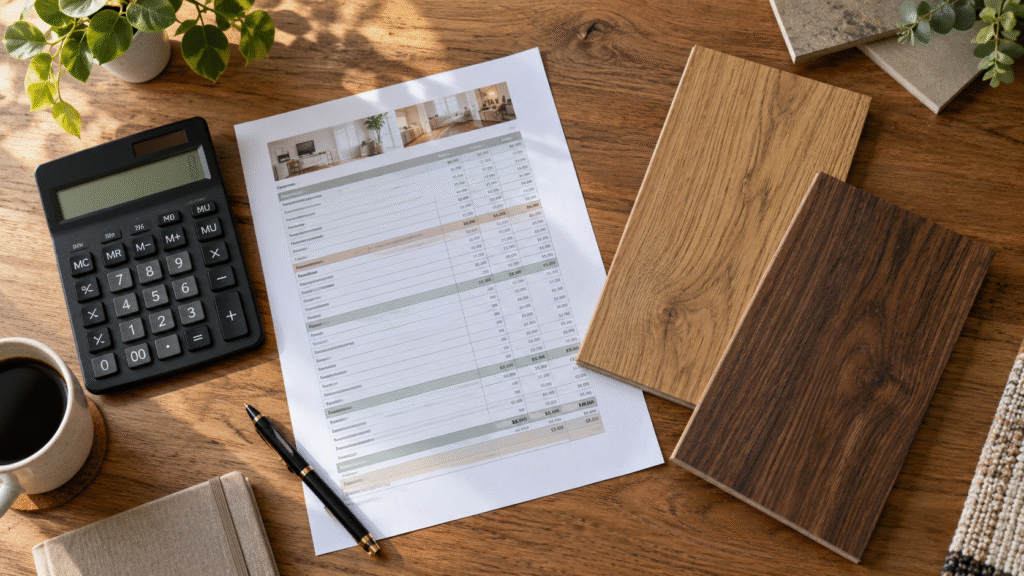
Overhead view of a calculator, printed budget spreadsheet, and light and dark wood flooring samples arranged on a wooden table in warm natural sunlight.

Engineered wood’s layered construction — a real wood veneer over an engineered core — makes it significantly more affordable than solid hardwood while still delivering an authentic wood look and feel. For most Indian homes covering multiple rooms, this cost difference adds up meaningfully across a full flooring project.

Solid hardwood costs more upfront, but its ability to be sanded and refinished repeatedly over decades can make it a better long-term value for a room you don’t plan to renovate again soon — particularly formal spaces that see less daily wear.

Overhead view of a calculator, printed budget spreadsheet, and light and dark wood flooring samples arranged on a wooden table in warm natural sunlight.

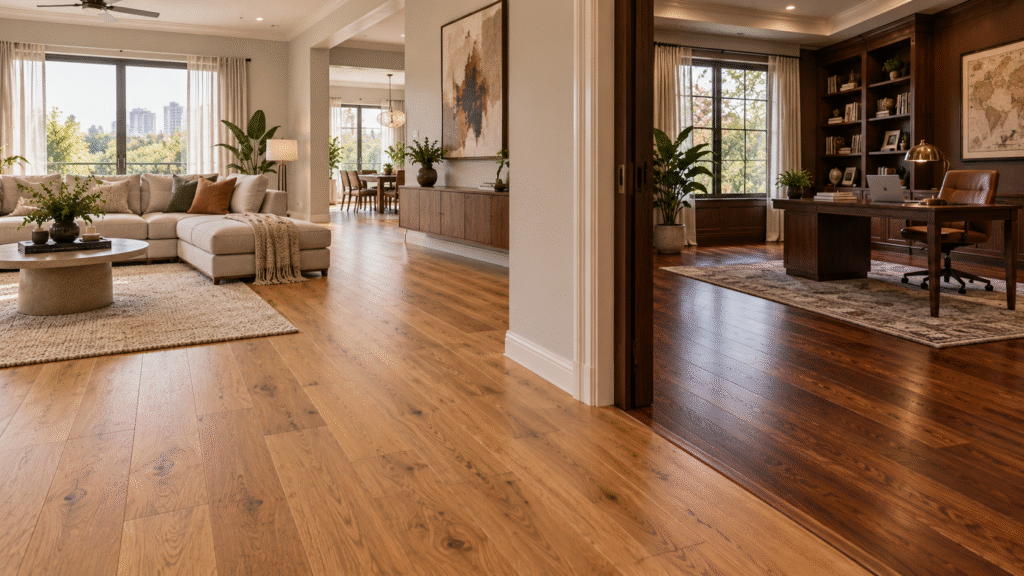
Which rooms actually suit each type matching wood to the space

Engineered wood’s dimensional stability makes it the safer choice for the majority of Indian homes, where humidity swings between seasons can be significant. Living rooms, bedrooms, and most general living spaces benefit from engineered wood’s resistance to warping and gapping.

Solid hardwood performs best in rooms with more stable humidity and less direct exposure to monsoon-season moisture — think formal living rooms, studies, or libraries, especially in homes with good climate control. Avoid solid hardwood in bathrooms, kitchens, or any room with high moisture exposure.

Which rooms actually suit each type matching wood to the space

Cost and maintenance compared

Engineered Wood Solid Hardwood
Cost (India 2026) ₹250 – ₹600 per sq ft ₹450 – ₹1,200+ per sq ft
Humidity stability Excellent — layered construction resists warping Fair — can expand/contract with Indian humidity swings
Best rooms Living rooms, bedrooms, most of the home Formal living areas, libraries, low-humidity rooms
Refinishing Limited — thin top veneer allows 1–2 light sands Extensive — can be sanded and refinished many times over decades
Installation Faster, often floating or glue-down Slower, typically nailed or glued to subfloor

Prices are indicative for 2026 and vary by wood species, finish, and supplier. Installation cost is typically additional and quoted separately.

Maintenance and installation what most homeowners underestimate

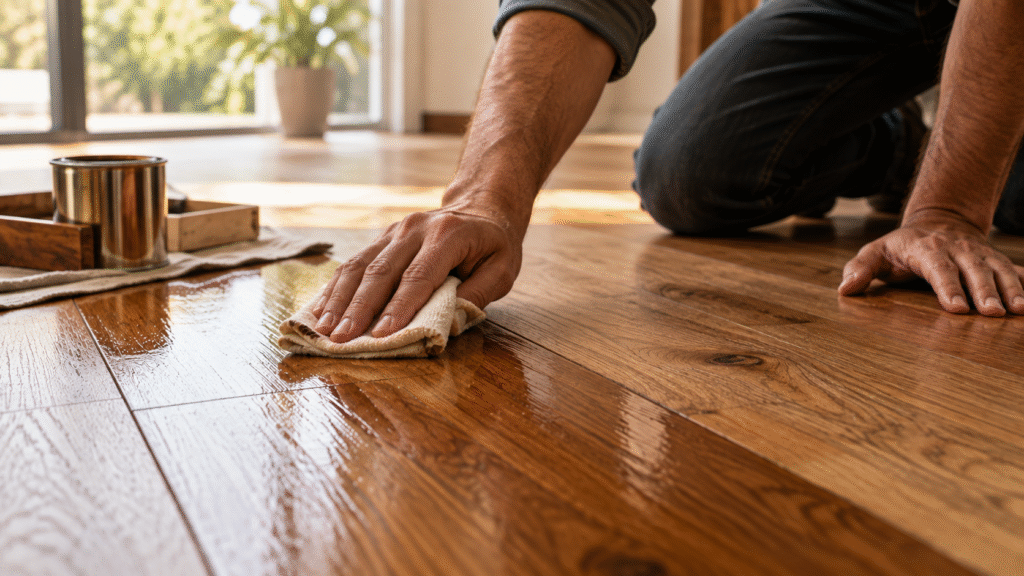
Engineered wood’s veneer layer is thinner than most buyers expect — it typically tolerates only one or two light refinishing sands over its lifetime before the veneer wears through. Solid hardwood needs periodic resealing to maintain moisture resistance, particularly in humid Indian climates, and skipping this accelerates wear. Both types need protection from standing water; even engineered wood’s water resistance has limits and isn’t a substitute for proper spill cleanup.

On installation, engineered wood typically goes down faster, often as a floating floor or glued directly to the subfloor, making it a practical choice for renovations where minimising disruption matters. Solid hardwood installation is more involved, generally nailed or glued to a properly prepared subfloor, and benefits from acclimatisation time in the room before installation — particularly important given how much Indian indoor humidity can shift seasonally.

Choosing the right finish and grain style

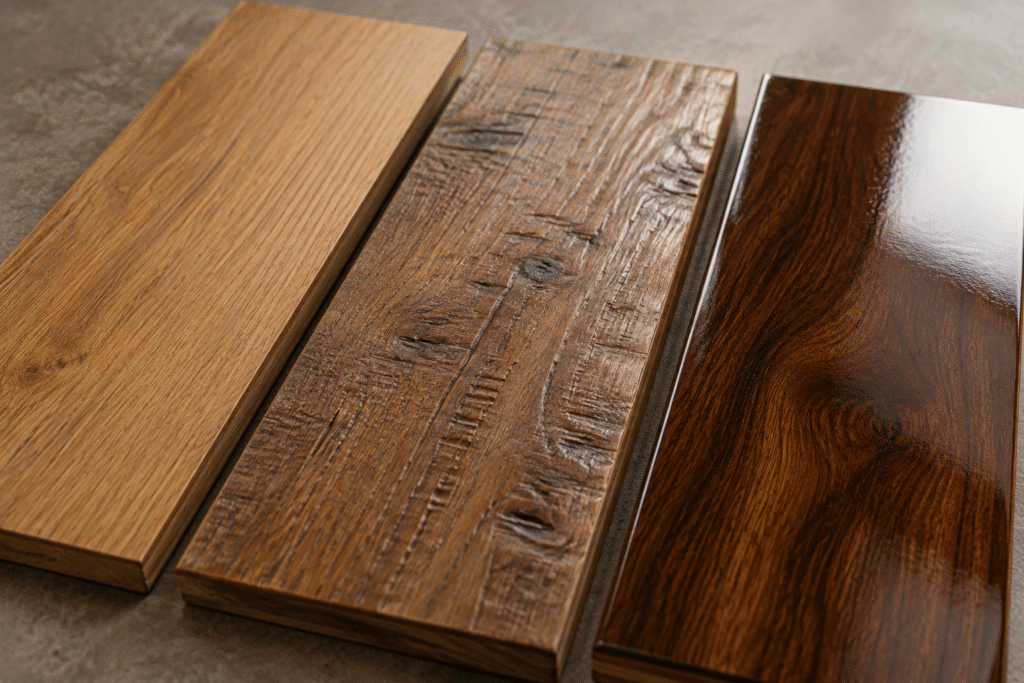
Beyond engineered versus solid, the finish you choose affects both maintenance and how forgiving the floor is day to day. Matte and hand-scraped finishes hide scratches and dust far better than high-gloss finishes, making them a more practical choice for households with pets, children, or high foot traffic. Glossy finishes look striking in photographs but show every scuff and footprint within days of installation.

Grain style matters too. Wider planks and more pronounced grain patterns tend to disguise minor wear and seasonal movement better than narrow, uniform planks — a genuine advantage in a climate where some expansion and contraction is unavoidable. If you’re unsure which finish suits your household’s daily use, ask to see samples under both natural and evening lighting, since gloss and grain read very differently depending on the light in the room.

Choosing the right finish and grain style

Sustainability considerations worth knowing

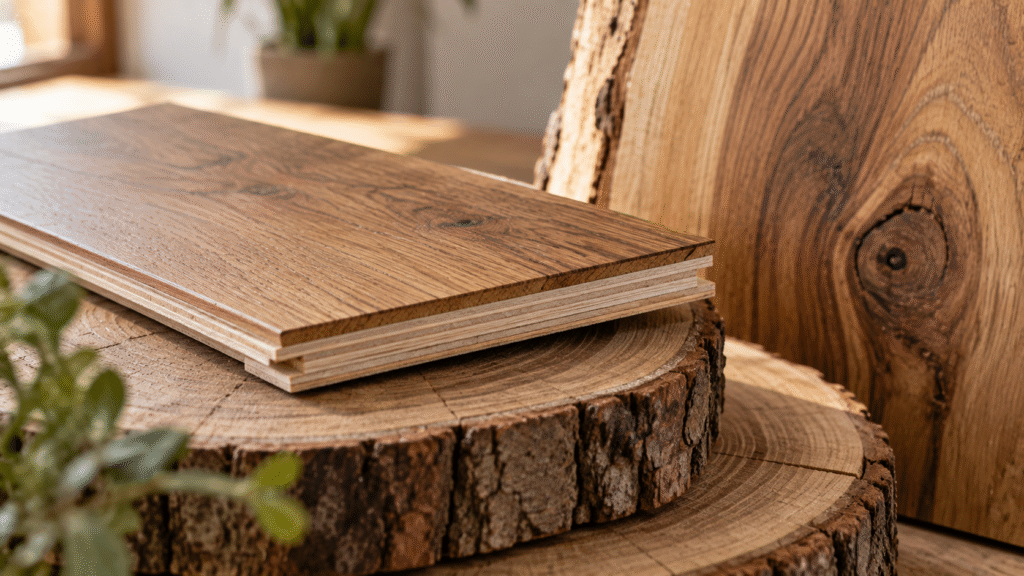
Close-up of an engineered wood flooring sample resting on raw timber cross-sections, highlighting its layered construction, detailed wood grain, bark texture, and natural growth rings in warm daylight.

Engineered wood generally has a smaller environmental footprint per square foot than solid hardwood, since its layered construction uses less premium timber for the same visual result — a real veneer sits atop a core made from more readily available wood species. This makes engineered wood a reasonable choice for homeowners who want an authentic wood look without contributing to the same level of hardwood demand.

That said, sourcing matters more than material type alone. Ask your supplier whether their hardwood is certified from responsibly managed forests, since sustainable sourcing varies significantly between suppliers regardless of whether you choose engineered or solid wood.

Close-up of an engineered wood flooring sample resting on raw timber cross-sections, highlighting its layered construction, detailed wood grain, bark texture, and natural growth rings in warm daylight.

So where should you begin?

Start by mapping out which rooms actually need wood flooring and how much daily wear each one sees, since that single factor determines whether engineered or solid hardwood makes more sense before you even look at cost. High-traffic living areas and rooms with humidity exposure point toward engineered wood, while formal, low-traffic spaces with stable climate control can justify the investment in solid hardwood.

If you’re deciding purely on budget, remember that the comparison isn’t just the upfront price — factor in how many times each option can realistically be refinished over the years you plan to stay in the home. A cheaper engineered floor that needs full replacement in a decade can end up costing more than a hardwood floor refinished twice over the same period.

See it all at De Ceramica, Gurgaon

Photos rarely capture the real difference between engineered and solid hardwood — grain depth, finish, and how each feels underfoot are best judged in person. At De Ceramica’s showroom, our wood flooring range includes both engineered and solid hardwood options suited to different rooms, budgets, and maintenance preferences.

With more than 21 years in the industry, our team helps homeowners and architects match the right wood flooring type to each room in a project — not a single blanket choice for the whole home — based on humidity exposure, budget, and long-term maintenance expectations.

Visit us at A-511, Sushant Lok Phase 1, opposite IFFCO Chowk Metro Station, Gurugram, or book a free design consultation and we’ll help you plan tiling for your villa from foyer to poolside.

Frequently asked questions

Q.1 Is engineered wood flooring cheaper than hardwood in India?

Yes, generally. Engineered wood typically costs ₹250–₹600 per sq ft compared to ₹450–₹1,200+ for solid hardwood in 2026, making it the more budget-friendly option for covering multiple rooms.

Q.2 Can hardwood flooring be refinished more times than engineered wood?

Yes. Solid hardwood can typically be sanded and refinished many times over its lifespan, while engineered wood’s thinner veneer layer generally allows only one or two light refinishing sessions before it wears through.

Q.3  Which rooms should avoid solid hardwood flooring in Indian homes?

Bathrooms, kitchens, and any room with regular moisture exposure should avoid solid hardwood, since it’s more prone to warping in humid or wet conditions. Engineered wood’s layered construction handles moderate humidity swings considerably better.

How can we help you?