
Engineered Wood vs Hardwood Flooring: Which Is Right for Indian Homes & Climate?
Engineered Wood vs Hardwood Flooring: Key Differences , Pros & Cons
f you are planning a flooring upgrade for your home, you have almost certainly run into the same question everyone faces at the showroom: should you go with engineered wood flooring or hardwood flooring? On the surface both look the same — natural wood, warm tones, timeless finish — yet they are built differently, behave differently in Indian climates, and suit different homes and budgets. This guidebreaks down the real differences so you can decide with confidence.
Before we compare them, it helps to clear up one common source of confusion.Engineered wood flooring and solid hardwood flooring are not just two names for the same product — they are constructed on opposite principles. Engineered wood is a layered board with a real wood veneer on top and a stable plywood or HDF core beneath. Solid hardwood is milled from a single piece of timber throughout. That single structural difference drives almost every other decision: durability in humidity, installation method, maintenance and cost.
What is engineered wood flooring?
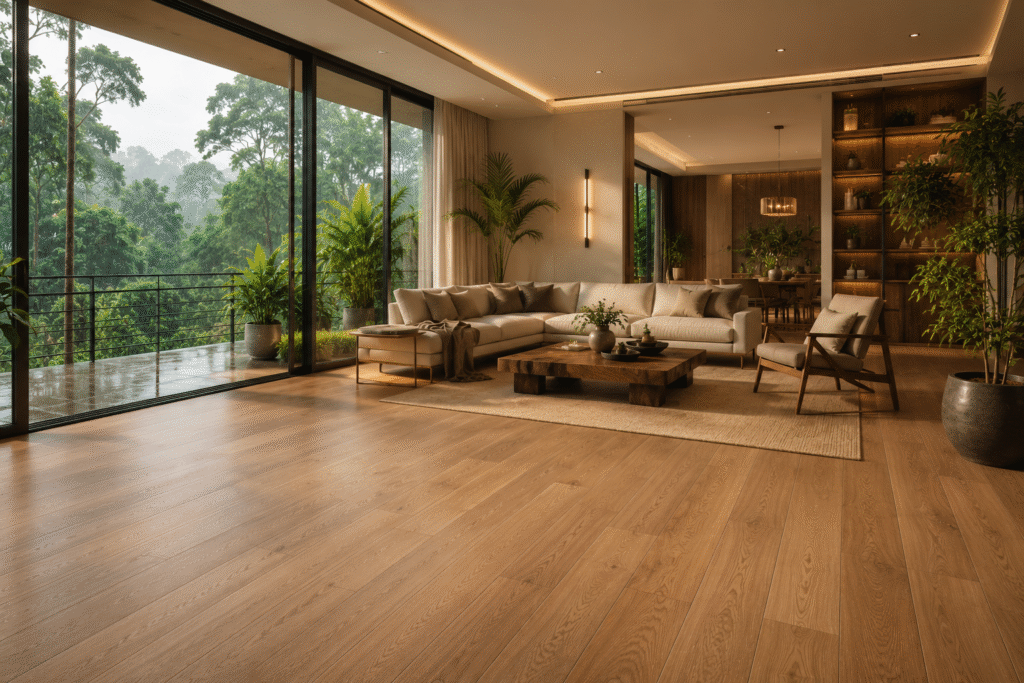
Engineered wood flooring is a multi-layer board where a genuine hardwood veneer — typically 2 mm to 6 mm thick — is bonded over a core of high-density fibreboard (HDF) or cross-ply plywood. The cross-ply construction is what gives engineered wood its key advantage: dimensional stability. Unlike solid wood, the core resists the expansion and contraction caused by humidity fluctuations, which makes it far better suited to the Indian climate — especially in monsoon-heavy regions like Delhi NCR, Gurgaon, Mumbai and Bengaluru.
The surface veneer is real wood, so it looks, feels and smells exactly like solid hardwood. Many premium engineered wood flooring options can even be sanded and refinished once or twice over their lifetime, giving you the longevity of a natural product with the practical performance of an engineered one.
What is hardwood flooring?
Hardwood flooring — also called solid wood flooring — is milled from a single piece of timber, typically 18 mm to 22 mm thick. Species commonly available in India include teak, oak, walnut, maple and acacia. The entire board is wood from top to bottom, which means it can be sanded and refinished multiple times over its lifetime — sometimes spanning 50 to 100 years in the right conditions.
The trade-off is moisture sensitivity. Solid hardwood flooring expands and contracts significantly with changes in humidity. In India’s tropical climate — with relative humidity regularly swinging between 30% in winter and 90% during monsoon — this can lead to warping, cupping or gapping if the product is not correctly acclimated, installed and maintained. This is why solid hardwood is rarely recommended for ground floors, basements or any room with direct moisture exposure in Indian homes.
What is hardwood flooring?
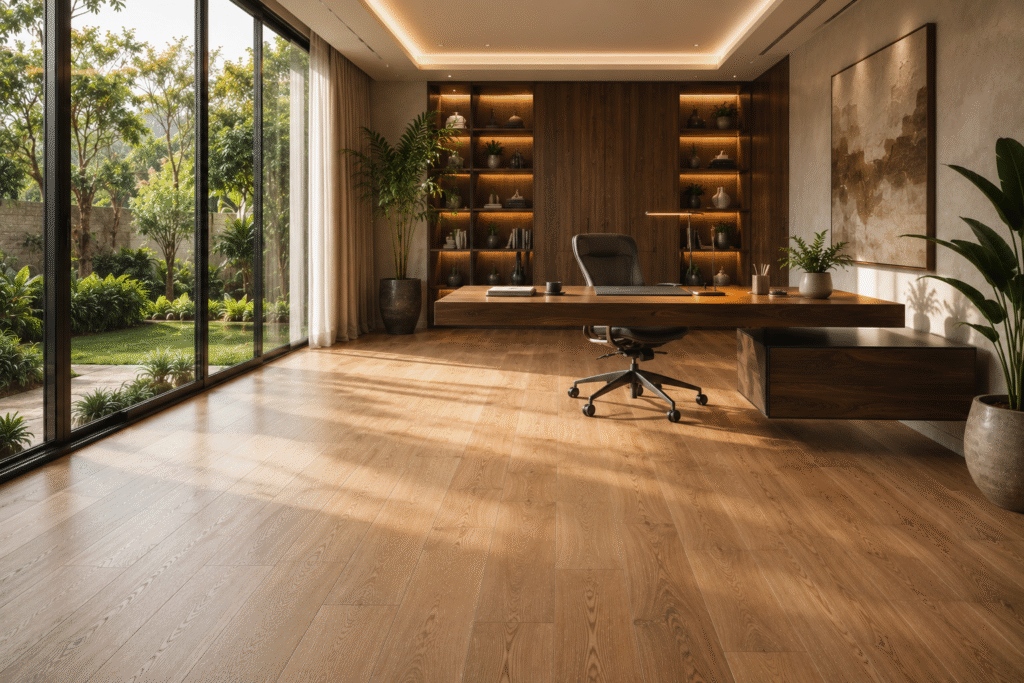
Engineered Wood vs Hardwood: side-by-side comparison
| Factor | Engineered Wood | Solid Hardwood |
|---|---|---|
| Construction | Hardwood veneer + HDF/plywood core | Single solid timber plank |
| Humidity resistance | Excellent — stable in Indian climate | Poor — expands/contracts significantly |
| Best suited for | All floors incl. ground floor & monsoon regions | Upper floors, dry climates, controlled environments |
| Refinishing | 1–2 times (depends on veneer thickness) | Multiple times over 50–100 years |
| Installation | Floating, glue-down or staple — quicker | Nail/staple-down — requires acclimatisation |
| Maintenance | Regular sweep & occasional damp mop | Strict — no damp mopping, careful humidity control |
| Cost (India) | ₹180 – ₹600+ per sq ft | ₹350 – ₹1,200+ per sq ft |
Prices are indicative for 2026 and vary by collection, size, finish and thickness. For an exact quote, it is always best to see the tiles in person.
Indian climate & flooring: Why it changes everything
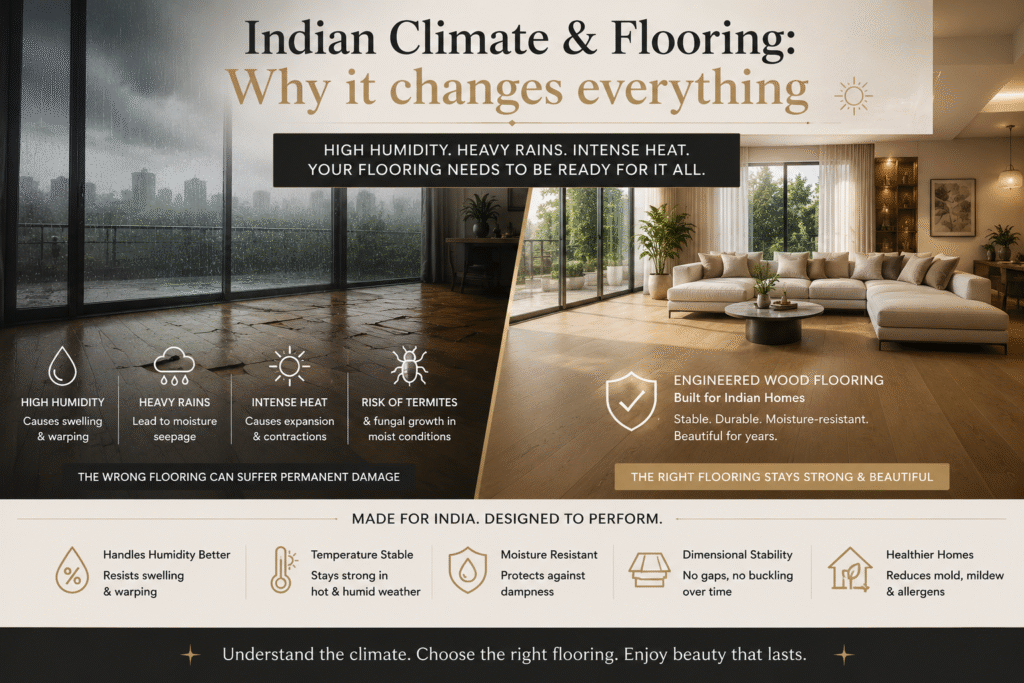
India’s climate is among the most demanding for wood flooring in the world. The country experiences four distinct seasonal shifts — dry winters, scorching pre-monsoon summers, a high-humidity monsoon lasting three to four months, and a brief post-monsoon transition. Relative humidity in cities like Gurgaon, Delhi, Mumbai and Chennai can range from under 30% in January to over 85% during July and August.
Engineered wood flooring was specifically developed to solve this problem. The cross-directional layering of the core neutralises the tension that causes wood to move with humidity, so the floor remains flat and stable across all four seasons. For most Indian homes — especially those without year-round air conditioning or those on ground and lower floors — engineered wood flooring is the more practical and reliable choice
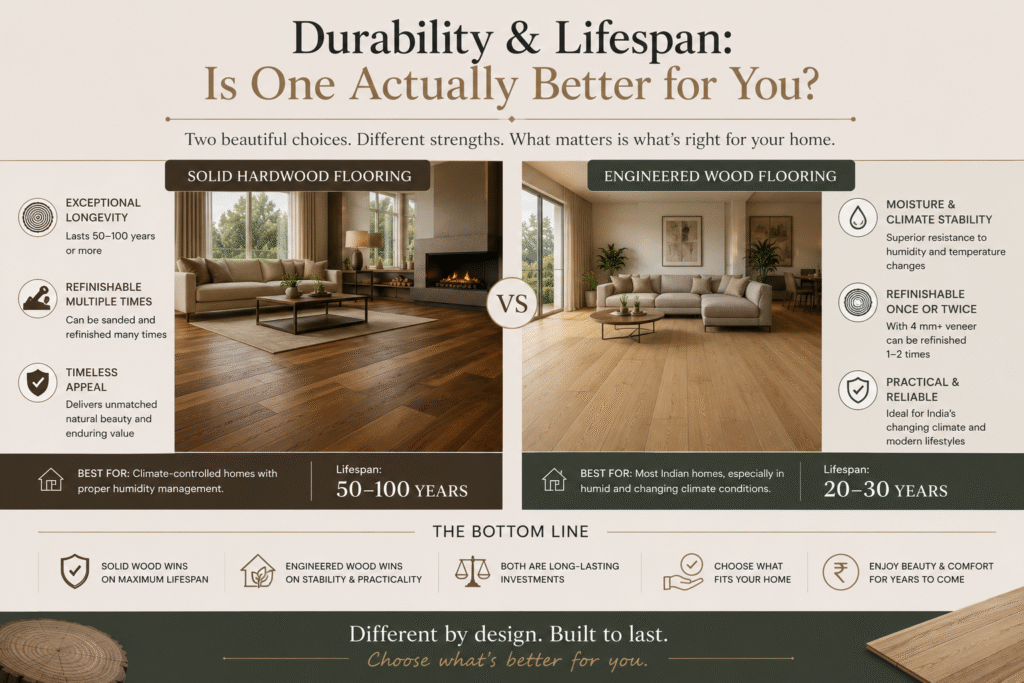
Durability & lifespan: is one actually better for you?
Both engineered wood and solid hardwood flooring are long-lasting options, but they age differently. Solid hardwood offers exceptional longevity, often lasting 50–100 years, and can be sanded and refinished multiple times. In climate-controlled homes with proper humidity management, it delivers outstanding durability and timeless appeal.
Engineered wood flooring with a 4 mm or thicker veneer typically lasts 20–30 years and can be refinished once or twice. For most Indian homeowners, this lifespan is more than sufficient. Its superior dimensional stability and moisture resistance help it maintain its appearance better than solid wood in India’s changing climate, making it a practical and reliable choice for modern homes.
Installation: What You Need to Know Before You Buy
Cost: what you are really paying for
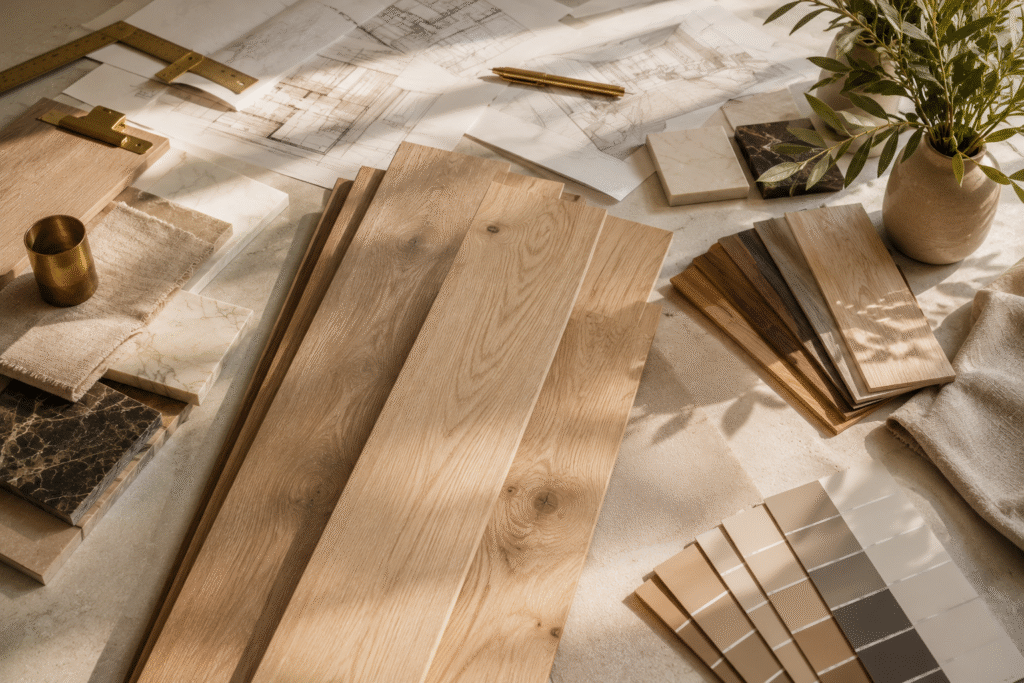
Engineered wood flooring costs between ₹180–₹600 per sq. ft. in India, depending on the veneer, core quality, and finish, while solid hardwood flooring starts at around ₹350 per sq. ft. and can exceed ₹1,200 per sq. ft. for premium imported species. Although hardwood offers natural beauty, engineered wood delivers a similar premium appearance with better stability, easier maintenance, and a significantly lower overall cost, making it the preferred choice for most modern Indian homes.
So which should you choose?
Choose engineered wood flooring if your home is in a city with significant monsoonhumidity (virtually all of India), if the installation is on a ground floor or concrete subfloor, if you want a faster and cleaner installation, or if you are working within a defined budget but still want the warmth and beauty of real wood underfoot. It is the right choice for the overwhelming majority of Indian homes.
Choose solid hardwood flooring if you have a climate-controlled home with stable year-round humidity (18–55% RH consistently), a timber subfloor to nail into, a long-term ownership mindset, and a preference for a floor that can be refinished repeatedly over several decades.
See engineered wood and hardwood flooring at De Ceramica, Gurgaon
The easiest way to settle this comparison is to experience both. At De Ceramica, our wood flooring showroom in Gurgaon brings engineered wood flooring, hardwood flooring, WPC decking and parquet options together under one roof, so you can see the plank sizes, feel the surface finishes and compare veneer thicknesses side by side instead of guessing from a catalogue.
With more than 21 years in the industry, our team offers personalised design guidance and coordinated installation support across Gurgaon and the wider Delhi NCR region — helping you plan a flooring solution that fits your home’s layout, your subfloor type, your climate exposure and your budget, not just what looks good in a brochure. Visit us at A-511, Sushant Lok Phase 1, opposite IFFCO Chowk Metro Station, Gurugram, or book a free design consultation and we will help you choose the right wood flooring for your home.
Frequently asked questions
Q.1 Is engineered wood flooring as good as solid hardwood?
For most Indian homes, yes — and in many practical ways better. The surface is genuine hardwood, so it looks and feels identical. The engineered core outperforms solid wood in humidity resistance, which is the single most important performance factor in the Indian climate..
Q.2 Can engineered wood flooring be installed over tiles or concrete?
Yes. Engineered wood flooring can be glued or floated directly over a flat concrete or tile subfloor, with an appropriate moisture barrier. Solid hardwood generally cannot — it requires a timber subfloor for nailing, which adds significant cost in most Indian
apartments.
Q.3 . Which is easier to maintain — engineered wood or solid hardwood?
Engineered wood flooring is lower maintenance. Regular sweeping and an occasional slightly damp mop with a wood-safe cleaner is all it needs. Solid hardwood requires strict humidity control, no wet mopping, and more frequent inspection for gaps or warping, especially during monsoon months.