
Floor Heating System Guide for Indian Homes (2026
Why freestanding bathtubs are gaining traction in Indian homes
For a large part of the year, Indian homes don’t need heating at all. But in North India especially, winter mornings can bring floor surface temperatures cold enough to make barefoot walking genuinely unpleasant — particularly on stone, marble, or large-format porcelain, which conduct heat away from feet quickly.
A floor heating system solves this at the source rather than relying on space heaters or warm rugs, delivering consistent, even warmth across the entire floor without the dry air or visible clutter that portable heaters bring. It’s increasingly being specified in premium villas and apartments as a comfort feature, particularly in bathrooms and living areas.
How underfloor heating actually works
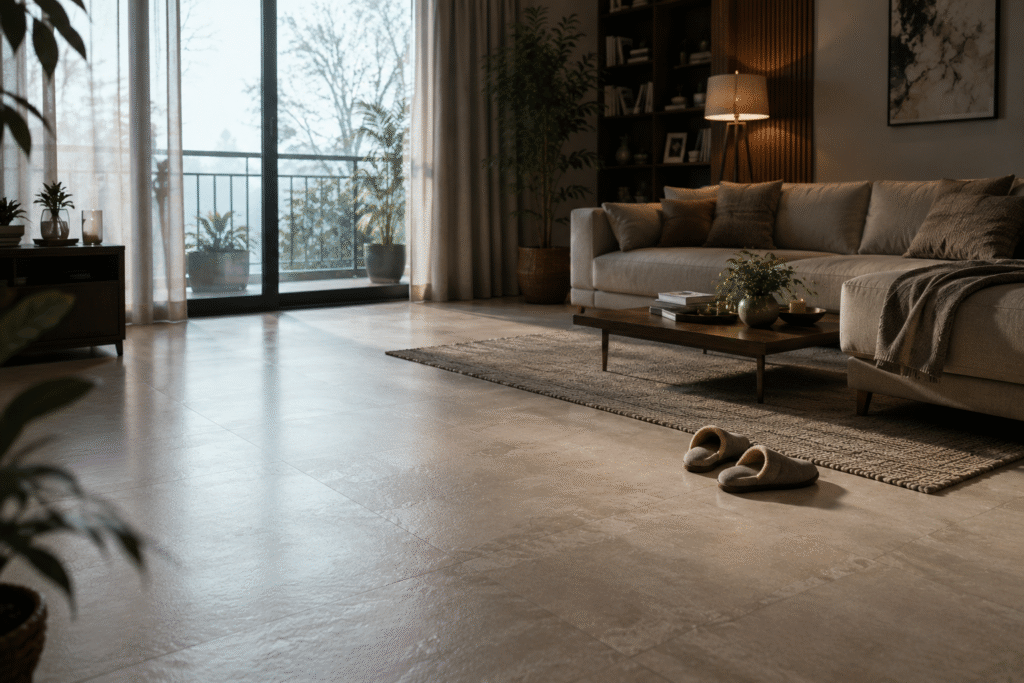
Indian homes don’t need heating for most of the year. But North India’s winter mornings can bring floor temperatures cold enough to make barefoot walking genuinely unpleasant — especially on stone, marble, or large-format porcelain, which pull heat away from feet quickly.
A floor heating system fixes this at the source instead of relying on space heaters or warm rugs. It delivers consistent, even warmth across the entire floor, skipping the dry air and visible clutter that portable heaters bring. Premium villas and apartments increasingly specify it as a comfort feature, particularly in bathrooms and living areas.
Where to install a floor heating system in your home
A floor heating system doesn’t need to be installed across an entire home to be worthwhile — in fact, most Indian homeowners get the best value by targeting specific rooms.
- Bathrooms — the most common and highest-impact choice, since bare feet on cold tile first thing in the morning is where the discomfort is most felt.
- Master bedrooms — particularly where large-format stone or porcelain flooring is used, which otherwise stays noticeably cold through winter.
- Living and family areas — worth considering in larger homes where the whole family gathers during cooler months.
- Home offices or study rooms — increasingly requested in homes where these spaces are used daily through the year.
Where to install a floor heating system in your home
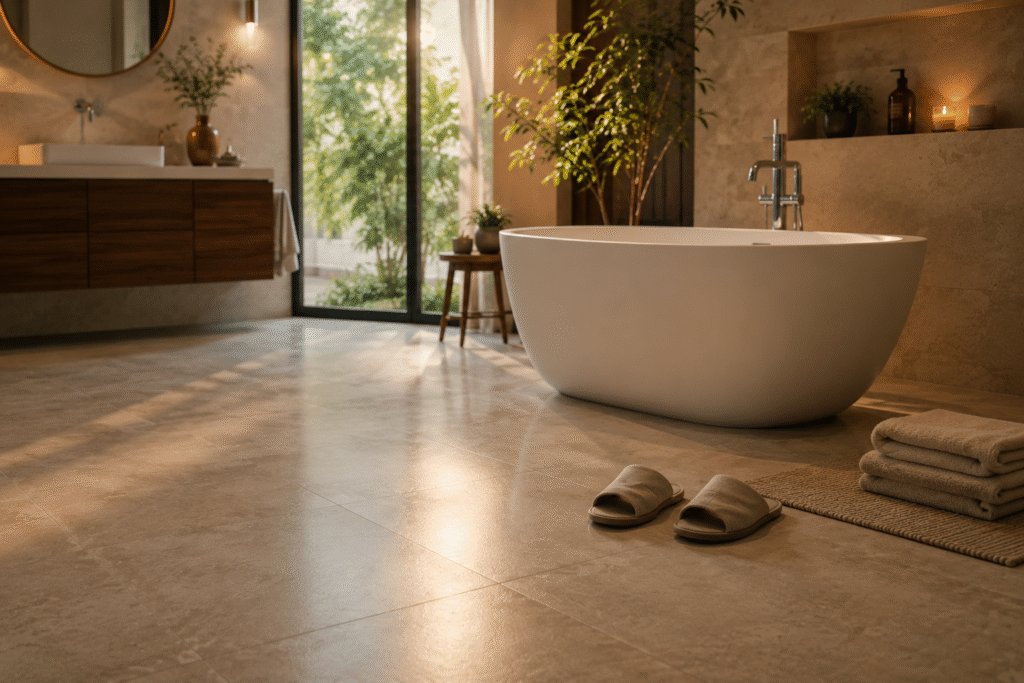
Electric vs hydronic systems compared
| System Type | Heat-Up Time | Running Cost | Best For | Indicative Cost (India 2026) |
|---|---|---|---|---|
| Electric (cable/mat) | Fast — 30–60 mins | Higher per hour, lower upfront | Bathrooms, small rooms, retrofit projects | ₹180 – ₹350 per sq ft |
| Hydronic (water-based) | Slower — 1–2 hours | Lower per hour, higher upfront | Whole-home heating, new-build villas | ₹300 – ₹600+ per sq ft |
Prices are indicative for 2026 and vary by brand, room size, and installation complexity. A qualified installer should always assess your specific space before finalising a system choice.
Installation considerations and compatible flooring
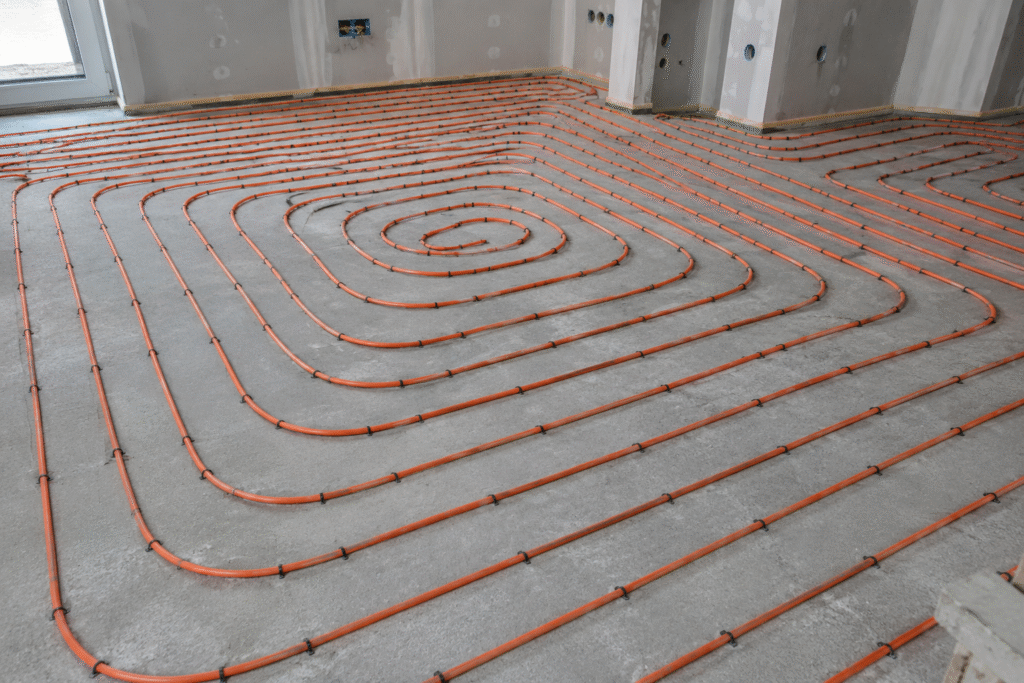
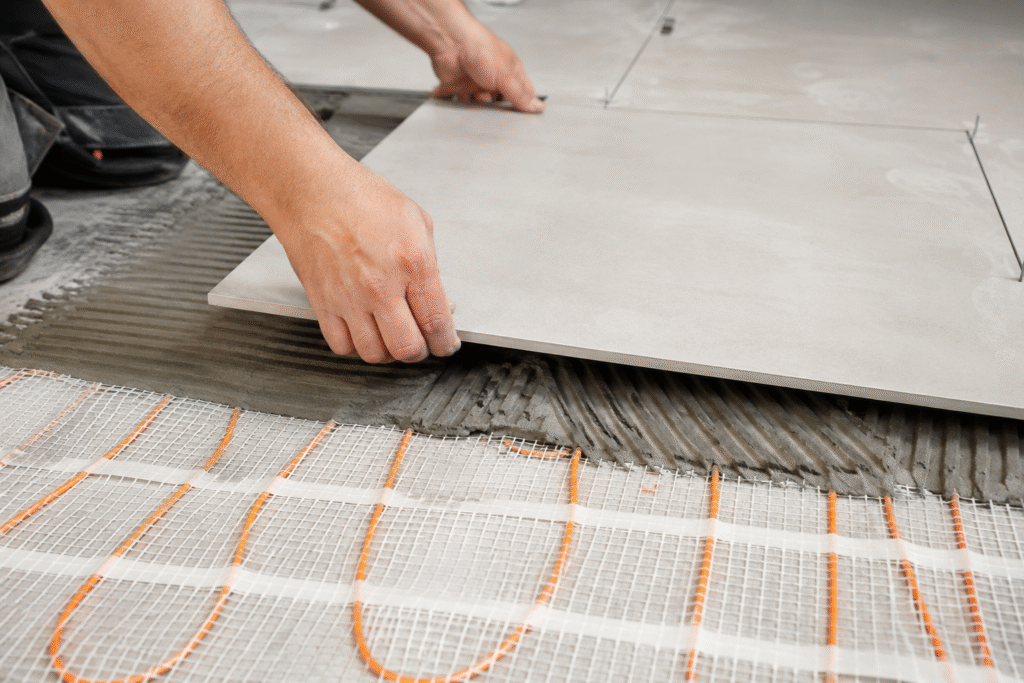
Plan a floor heating system before tiling begins — not after. The heating element sits in the screed or adhesive layer directly beneath the tile, so retrofitting it into an already-tiled floor means removing and relaying the entire surface.
Porcelain and vitrified tiles pair best with floor heating, since their density conducts heat efficiently and evenly. Natural stone works too, though it typically takes longer to warm up and cool down given its thickness. Skip engineered wood or laminate-look tiles above heating elements unless the manufacturer specifically rates them for this use. And always coordinate your electrician or plumber closely with your tiling contractor — mismatched timing can damage heating cables or pipes during tile-laying.
Running costs and energy efficiency
Running costs depend heavily on system type, room size, and how many hours per day the heating is used. Electric systems typically cost more per hour to run but require no separate boiler or heat pump investment, making them cost-effective for the shorter heating season most of India experiences. Hydronic systems cost more to install but are considerably more efficient to run over extended periods, which matters more in colder regions or homes that run heating for several months a year.
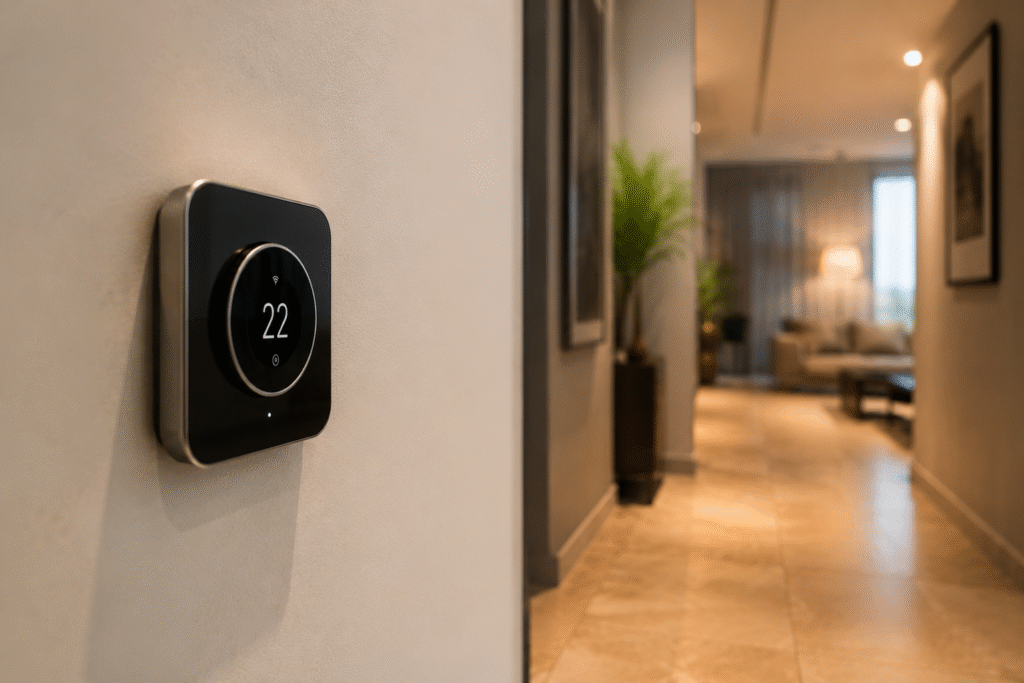
A programmable thermostat is worth the investment regardless of system type — scheduling the heating to activate only during the hours it’s actually needed (typically early morning in most Indian homes) significantly reduces running costs compared to leaving the system on continuously.
Running costs and energy efficiency
Running costs and energy efficiency
Running costs depend heavily on system type, room size, and how many hours per day the heating is used. Electric systems typically cost more per hour to run but require no separate boiler or heat pump investment, making them cost-effective for the shorter heating season most of India experiences. Hydronic systems cost more to install but are considerably more efficient to run over extended periods, which matters more in colder regions or homes that run heating for several months a year.
A programmable thermostat is worth the investment regardless of system type — scheduling the heating to activate only during the hours it’s actually needed (typically early morning in most Indian homes) significantly reduces running costs compared to leaving the system on continuously.X
So where should you begin?
Start by deciding which rooms actually need underfloor heating, since trying to heat an entire home rarely makes sense given India’s short winter season. Within that, prioritise bathrooms and bedrooms first — the spaces where cold tile underfoot is felt most, particularly first thing in the morning — before considering living areas or larger zones.
If you’re deciding between electric and hydronic systems, consider the scope of your project: a single bathroom or a retrofit into an existing home almost always favours electric, since it’s simpler to install and doesn’t require reworking your plumbing infrastructure. A new-build villa planning whole-home heating from the ground up is where hydronic systems start to make more financial sense.
See it all at De Ceramica, Gurgaon
Tile selection and floor heating go hand in hand — your tile choice directly affects the system’s efficiency and how the finished floor feels underfoot. At De Ceramica’s showroom, our team helps you select porcelain and vitrified tiles suited specifically to floor heating applications, alongside the wider tile and bathroom fittings your project needs.
Our 21-plus years in the industry means we work closely with homeowners, architects, and interior designers to plan tile selection around practical considerations like floor heating — not just aesthetics. That’s how the finished result performs as well as it looks.
Visit us at A-511, Sushant Lok Phase 1, opposite IFFCO Chowk Metro Station, Gurugram, or book a free design consultation and we’ll help you plan tiling for your villa from foyer to poolside.
Frequently asked questions
Q.1 Is underfloor heating worth it in India’s climate?
For homes in North India, particularly Delhi NCR, underfloor heating is genuinely useful for a few winter months each year — especially in bathrooms and bedrooms with stone or large-format tile flooring. It’s less essential in warmer southern or coastal regions, where the comfort benefit is more limited.
Q.2 Can underfloor heating be added to an existing tiled floor?
It’s possible but involves removing and relaying the existing tile, since the heating element sits directly beneath the tile in the screed or adhesive layer. It’s significantly easier and more cost-effective to plan underfloor heating during a renovation or new-build project rather than retrofitting it later.
Q.3 Which tiles work best with underfloor heating?
Porcelain and vitrified tiles are the best match — their density allows them to conduct and retain heat efficiently and evenly. Natural stone can also be used but generally takes longer to heat up and cool down. Always confirm with your tile supplier that the specific product is rated for underfloor heating use.