
Freestanding Bathtub Buying Guide: Stone, Acrylic or Cast Iron?
Freestanding Bathtub Buying Guide: Key Differences, Pros & Cons
A freestanding bathtub is often the single feature that turns a bathroom into a wellness space. But once you start shopping, the real decision isn’t whether to get one — it’s which material to choose. Stone, acrylic and cast iron all look striking in photos, yet they behave very differently in daily use. This guide breaks down the real differences so you can buy with confidence.
Here’s the confusion most buyers run into: material choice isn’t just about looks. It changes the tub’s weight, how long your bath stays warm, how much upkeep it needs, and what your floor and plumbing need to support it. Get the material right, and the tub serves you for decades. Get it wrong, and you’re looking at a cracked acrylic shell or a floor that can’t take the load. That’s what this comparison sorts out.
What is a stone freestanding bathtub?
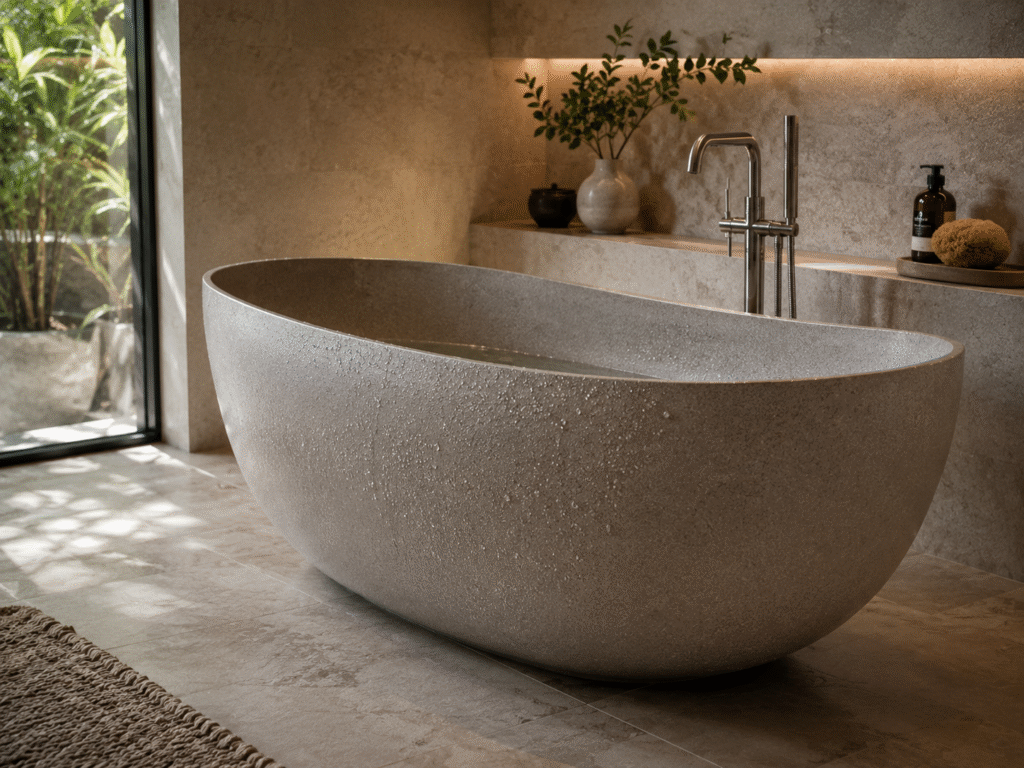
Stone bathtubs are usually made from stone resin or solid surface composite — crushed natural stone bound with resin, then moulded and polished. A few premium ranges use carved natural stone. Either way, you get a dense, substantial tub with a matte, almost sculptural finish that doesn’t feel like plastic or metal. Stone holds heat well and gives your bath a heavier, more grounded feel. The trade-off is weight: a stone tub can weigh 150–250 kg empty, so your floor needs to support it.
What is an acrylic freestanding bathtub?
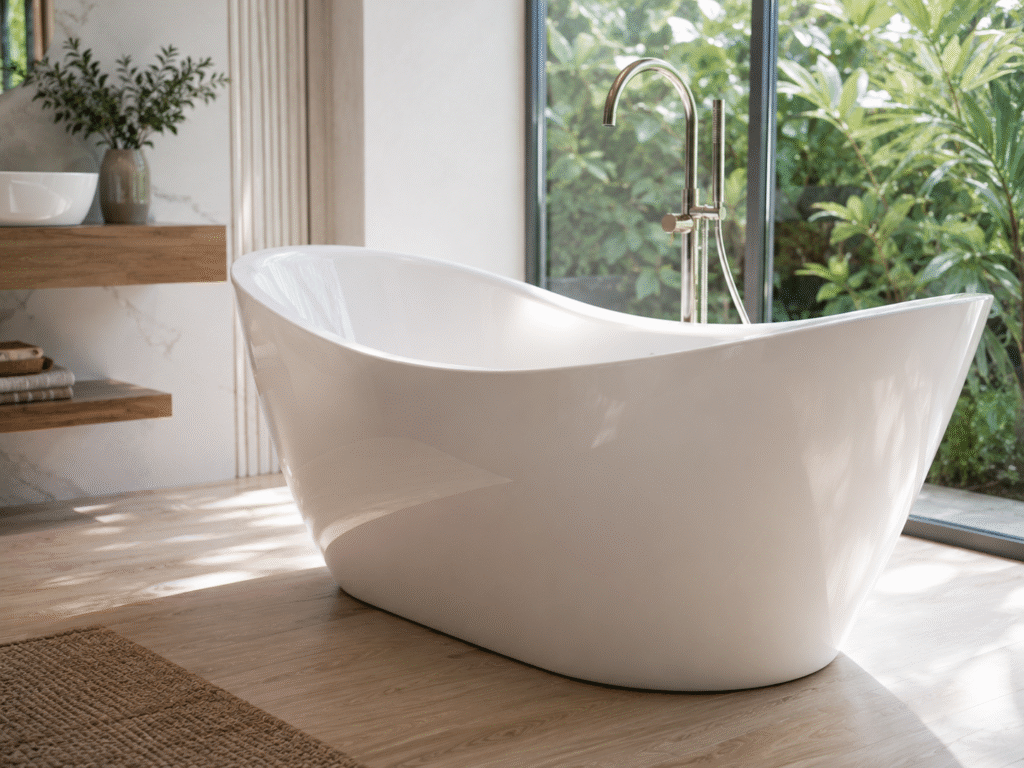
Acrylic tubs use a vacuum-formed acrylic sheet, reinforced with fibreglass on the underside for strength. This makes them the lightest option by far — often under 40 kg — so they install easily in almost any bathroom, including upper floors. Acrylic warms up quickly and holds a reasonably warm bath, though not as long as stone or cast iron. It also comes in the widest range of shapes and colours, since the material is easy to mould into curves and sculptural forms.
What is an acrylic freestanding bathtub?
Stone vs acrylic vs cast iron: side-by-side comparison
| Factor | Stone | Acrylic | Cast Iron |
|---|---|---|---|
| Weight (empty) | 150–250 kg | Under 40 kg | 100–180 kg |
| Heat retention | Very good | Moderate | Excellent |
| Durability | Excellent, dense and solid | Good, can scratch or crack | Excellent, resists chips |
| Installation | Needs reinforced flooring | Fits almost any bathroom | Needs reinforced flooring |
| Maintenance | Low — occasional resealing | Low — avoid abrasive cleaners | Low — enamel needs gentle care |
| Design range | Sculptural, matte finishes | Widest range of shapes & colours | Classic, glossy enamel finishes |
| Indicative cost (India) | ₹1,50,000 – ₹4,00,000+ | ₹40,000 – ₹1,50,000 | ₹2,50,000 – ₹6,00,000+ |
Prices are indicative for 2026. They vary by brand, size and finish. For an exact quote, see the tub in person.
What is a cast iron freestanding bathtub? Heat retention and comfort
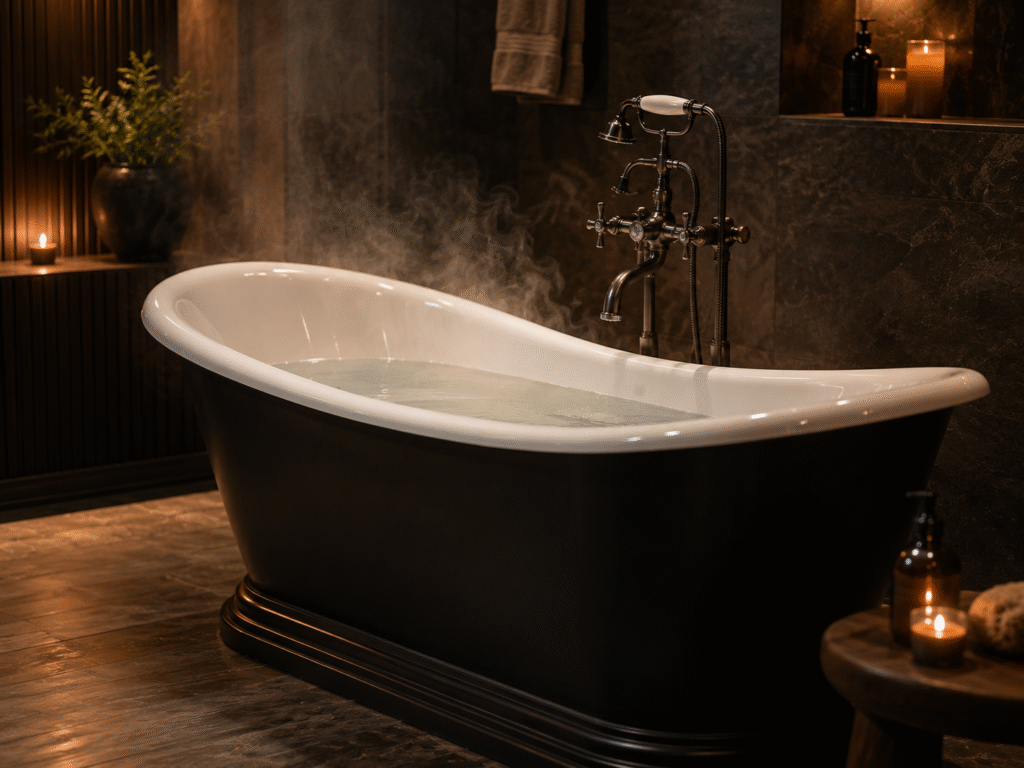
Cast iron tubs start as a moulded iron shell, then get coated with enamel for a smooth, glossy finish. They’re the heaviest option — often 100–180 kg — and by far the most durable, resisting scratches, chips and daily wear better than acrylic. Cast iron retains heat exceptionally well, keeping your bath warm for longer than acrylic. Most cast iron tubs sold in India are imported, which pushes the price up compared to acrylic and even some stone options.
If you like long, slow baths, heat retention matters as much as looks. Cast iron holds heat the longest, thanks to its dense mass. Stone comes close behind it. Acrylic heats up fast but loses warmth sooner, so you may need to top up with hot water during a longer soak. None of this affects how comfortable the tub feels to sit in — that comes down to shape and depth — but it does affect how long your bath actually stays enjoyable.
Maintenance and durability
All three materials are low-maintenance when you care for them correctly, but the risks differ. Acrylic can scratch or dull if you use abrasive cleaners, and a hard knock can crack the shell. Stone resists scratches well and just needs occasional resealing to keep its finish. Cast iron’s enamel coating resists chips and stains for decades, though a hard impact can chip the surface down to the iron. For a busy family bathroom, cast iron and stone tend to outlast acrylic; for a low-traffic guest bathroom, acrylic holds up just fine.
Maintenance and durability
Cost: what you are really paying for
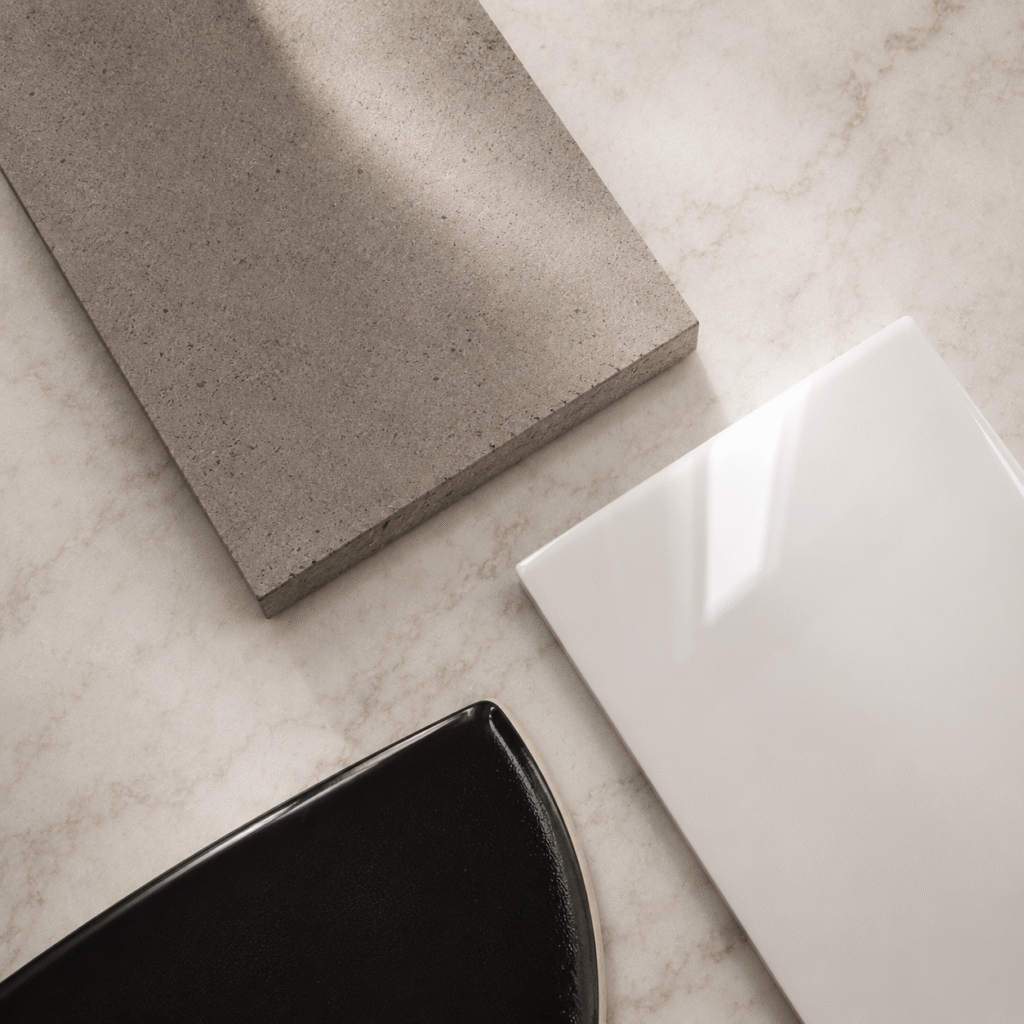
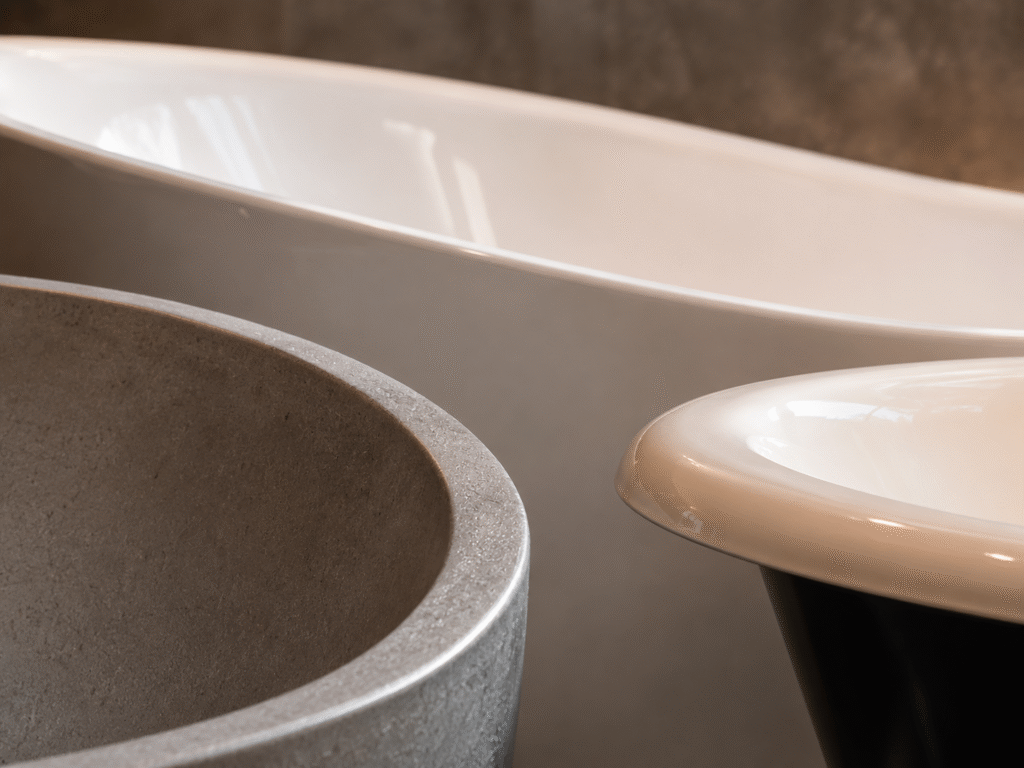
Acrylic wins clearly on price, which is why it dominates the mid-market. Stone sits in the middle, priced for its density, finish and heat retention. Cast iron costs the most, largely because most options in India are imported and because the material itself is heavier and more expensive to produce and ship. Paying more here buys you decades of durability and heat retention, not just a nicer surface — worth knowing if you’re deciding between a lower upfront cost and a tub that outlasts a renovation cycle.
So which should you choose?
Choose acrylic if you want the widest design choice, the easiest installation, and the lowest cost — a strong option for upper floors or a first bathroom renovation. Choose stone if you want a substantial, sculptural centrepiece and your floor can support the weight. Choose cast iron if heat retention and decades of durability matter more to you than upfront cost, and you’re building a ground-floor or reinforced bathroom to match. Whichever material you pick, confirm your floor’s load capacity and plumbing layout before you order.
See freestanding bathtubs at De Ceramica, Gurgaon
The easiest way to choose between stone, acrylic and cast iron is to stand next to all three. At De Ceramica, our wellness collection brings freestanding bathtubs, spa bathtubs and luxury shower enclosures together under one roof. You can compare weight, finish and depth side by side, instead of guessing from a catalogue photo.
With more than 21 years in the industry, our team offers personalised design guidance and coordinated installation support across Gurgaon and the wider Delhi NCR region. We help you match the right bathtub material to your floor, your budget and how you actually plan to use it.
Visit us at A-511, Sushant Lok Phase 1, opposite IFFCO Chowk Metro Station, Gurugram. Or book a free design consultation, and we’ll help you choose the right freestanding bathtub.
Frequently asked questions
Q.Which freestanding bathtub material is best for Indian bathrooms?
There’s no single best option — it depends on your floor and budget. Acrylic suits most homes and upper floors easily. Stone and cast iron suit ground-floor or reinforced bathrooms where you want a heavier, longer-lasting centrepiece.
Q.2 Do freestanding bathtubs need special flooring support?
Acrylic tubs generally don’t, since they’re light even when full. Stone and cast iron tubs can weigh 300 kg or more with water and a bather, so check your floor’s load capacity before installation, especially in apartments.
Q.3 How long does a freestanding bathtub last?
Cast iron and stone tubs commonly last decades with basic care. Acrylic tubs also last for years, but they’re more prone to scratches and cracks under heavy daily use, so they suit lower-traffic bathrooms best.