
Call Us Let's Talk Let's Talk

Porcelain Tiles in India: How Do You Choose the Right Tiles for Every Room?

What Are Porcelain Tiles?

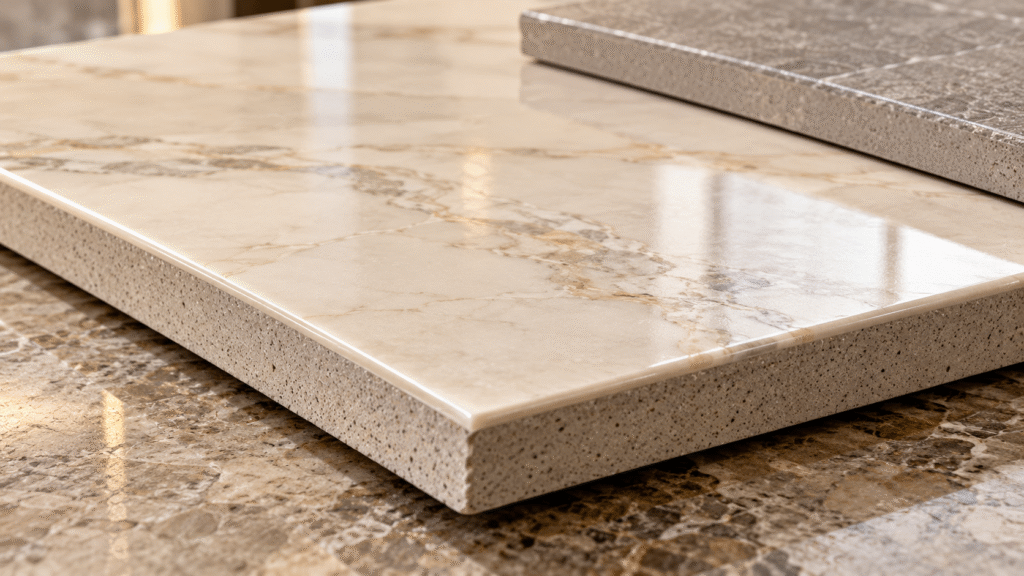
Porcelain tiles are ceramic tiles manufactured using carefully selected raw materials and a controlled firing process. They are generally characterised by a dense body and low water absorption.

These properties make suitable porcelain products useful for a variety of residential applications, including floors and walls.

However, performance varies by product. Before purchasing, check the manufacturer’s technical data rather than assuming that every porcelain tile offers the same strength, slip resistance or suitability for outdoor use.

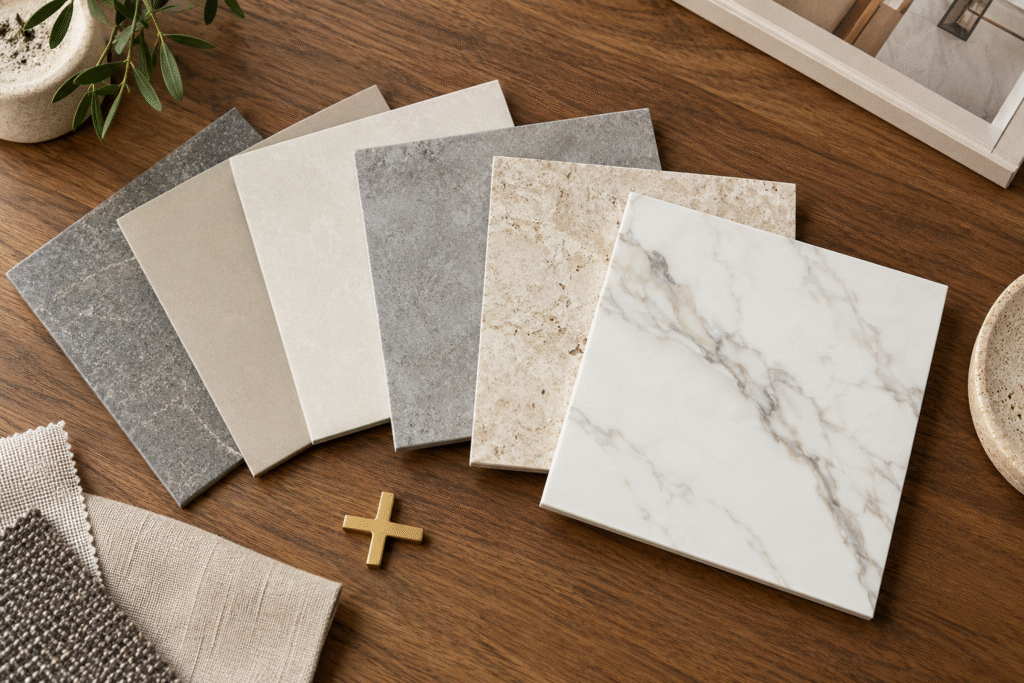
Porcelain tiles are available in multiple colours, patterns, sizes and surface finishes. These include stone-inspired textures, marble-look designs, concrete effects and understated solid colours.

Why Are Porcelain Tiles Popular in Indian Homes?

Porcelain tiles are available in styles that complement contemporary, minimalist, traditional and luxury interiors. Homeowners can explore natural-stone-inspired designs, marble-look surfaces, concrete effects and subtle neutral finishes without being restricted to the appearance of one material. Many porcelain surfaces can be maintained through regular sweeping and cleaning with a suitable, manufacturer-recommended cleaner. Maintenance requirements still depend on the finish, grout, installation quality and cleaning products used. Textured surfaces and grout joints may require more attention than smooth surfaces. Porcelain tiles are available for different floor and wall applications. The important consideration is choosing a product rated for the intended use. For example, a tile specified for a dry living-room floor should not automatically be used on an exposed terrace or a wet shower floor. Porcelain tiles are available in both conventional and large formats. Larger tiles can help create a more continuous visual appearance, while smaller formats may be more practical for intricate layouts and surfaces that require additional joints. The choice should balance the desired appearance with the room’s dimensions, drainage requirements and installation conditions.

Which Porcelain Tiles Are Best for Different Rooms?

Living rooms often benefit from flooring that creates visual continuity and complements the furniture, wall colours and natural lighting. Consider these options: Marble-look porcelain: Suitable for elegant, formal interiors. Stone-look porcelain: Creates a natural, understated appearance. Matte porcelain: Offers a softer visual effect with less reflection. Large-format porcelain: Can reduce visible grout lines when installed correctly. Before choosing a polished surface, consider how it behaves under your home’s lighting and whether its slip characteristics are appropriate for the intended use. Bedroom flooring should complement the room’s atmosphere while remaining practical for everyday use. Neutral shades, subtle stone effects and warm-toned designs can work well with different furniture styles. Matte and satin finishes are worth considering if you prefer a softer appearance without strong reflections. Compare samples with your wardrobes, bed frame, curtains and wall finishes before finalising the selection. Kitchen flooring needs to accommodate regular foot traffic, spills and frequent cleaning. When selecting kitchen porcelain tiles, check: Slip resistance under the expected conditions. Resistance to stains and common household cleaning products. Surface texture and ease of cleaning. Suitability for the intended floor or wall application. Compatibility with the substrate and installation method. For kitchen walls, decorative porcelain tiles can coordinate with countertops, cabinets and backsplashes. Bathrooms require careful product selection because different areas experience different levels of moisture and water exposure. For bathroom walls, you can explore polished, satin or textured designs depending on the overall aesthetic. For bathroom floors and shower areas, prioritise products with suitable slip-resistance characteristics for wet conditions. Also ensure the underlying waterproofing, drainage, grout and installation system are correctly specified. Large-format porcelain may work well on suitable bathroom walls, but shower floors often benefit from smaller formats or specifically designed systems that accommodate the required slope and drainage. Outdoor applications require products specifically rated for the intended environment. Before selecting tiles for a balcony, terrace, patio or other exposed area, confirm: Outdoor suitability. Slip resistance when wet. Weather and temperature suitability. Required thickness and installation method. Drainage and waterproofing requirements. Compatibility with the supporting surface. Never assume that a tile is suitable for outdoor use simply because it is made from porcelain.

Which Porcelain Tiles Are Best for Different Rooms?

Porcelain Tiles vs Other Tile Options What Should You Compare?

Factor What to check
Water absorption Review the manufacturer's declared specification.
Intended application Confirm whether the tile is suitable for floors, walls or outdoor areas.
Surface finish Compare polished, matte, satin and textured options.
Slip resistance Check the technical rating for the actual installation environment.
Size and thickness Match the format to the room and installation conditions.
Maintenance Review cleaning and care instructions.
Overall cost Include wastage, installation materials, labour and delivery.

How Do You Choose the Right Porcelain Tile Finish?

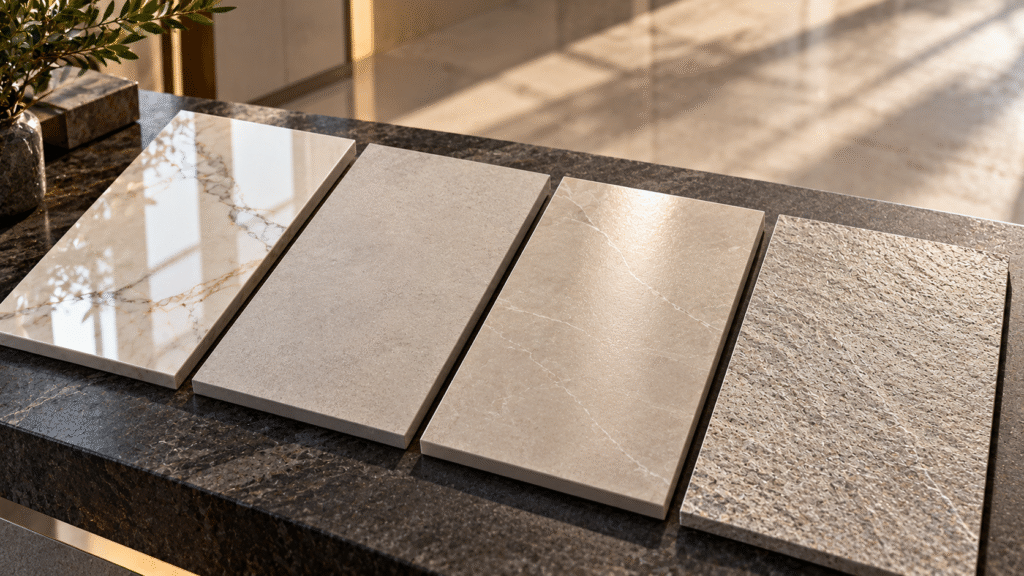
The surface finish affects both the visual appearance and the practical experience of using a tile. Polished tiles reflect more light and can create a refined appearance in living rooms, foyers and selected wall applications. Consider visibility of footprints, cleaning needs and slip characteristics before using polished tiles in areas exposed to water. Matte tiles have a more understated appearance and are available in numerous stone, concrete and solid-colour designs. Their suitability for wet areas depends on the actual slip-resistance specification, not simply on whether the surface looks matte. Satin finishes provide a moderate sheen between highly polished and more textured surfaces. They can be considered when you want a subtle reflection without a mirror-like appearance. Textured tiles can provide additional traction in appropriate applications. However, the level of slip resistance varies by product, and texture alone does not guarantee safety. Ask the supplier for relevant technical data before selecting a finish for a bathroom floor, balcony or outdoor space.

What Should You Know About Large-Format Porcelain Tiles in India?

Large-format tiles are a size category, whereas porcelain describes the tile material. This distinction matters when comparing products.

Not every porcelain tile is large format, and not every large-format tile is porcelain.

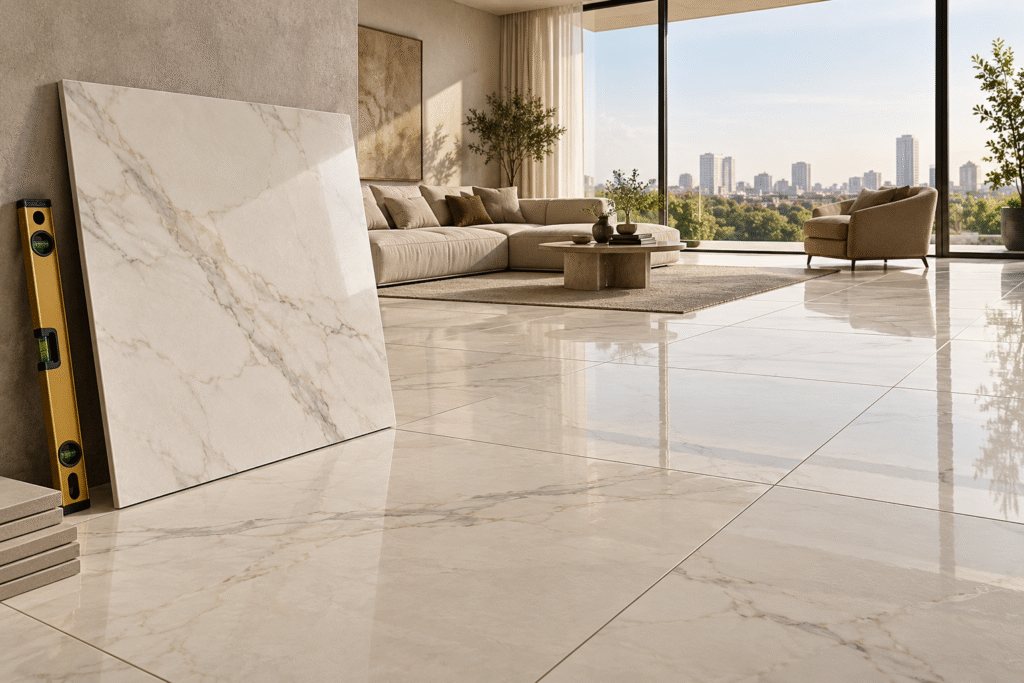
Large-format porcelain is worth considering when you want a continuous appearance across living-room floors, feature walls or suitable bathroom surfaces.

Before choosing large-format tiles, evaluate:

The room’s dimensions and layout.

The number and placement of visible joints.

Tile weight and handling requirements.

Substrate flatness and structural suitability.

Availability of appropriate installation materials.

Installer experience with the selected format.

Cutting, transport and replacement considerations.

Larger tiles are not automatically better for every space. The ideal format should suit the room, design and installation conditions.

For a dedicated discussion of large-format tile dimensions, installation planning and layout decisions, see De Ceramica’s existing large-format porcelain tile guide.

What Should You Know About Large-Format Porcelain Tiles in India?

What Mistakes Should You Avoid When Buying Porcelain Tiles?

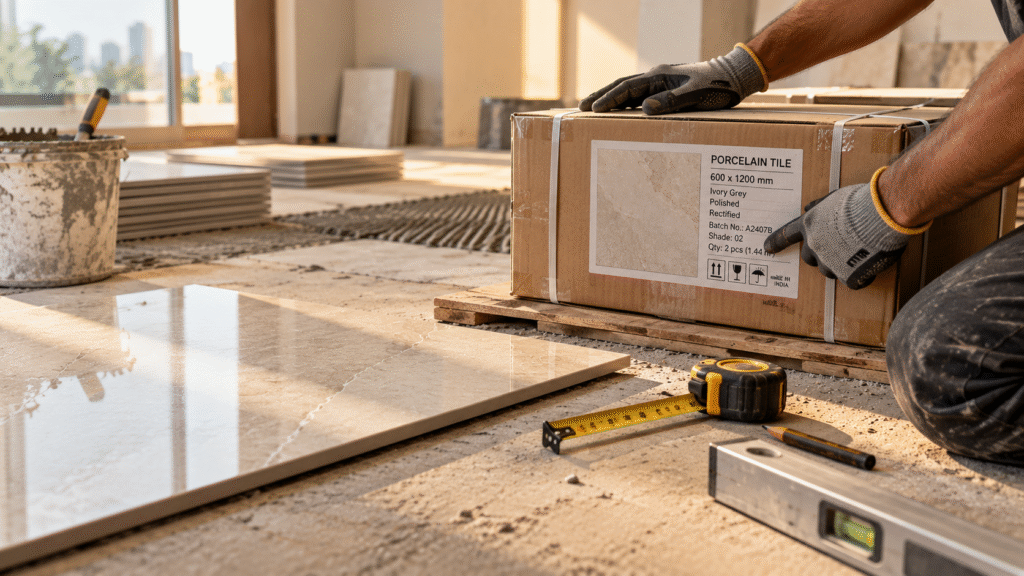
A tile may look attractive in a photograph but perform differently under actual lighting or in a wet environment. Examine samples and confirm the technical specifications before purchasing. Uneven substrates, unsuitable adhesives and inexperienced installation can affect the finished appearance and long-term performance. Measure the actual installation area and account for cuts, layout complexity and a suitable wastage allowance. Confirm quantities with your installer before placing the final order. Tile shade and calibration can vary between batches. Check batch details and order sufficient quantities for the planned project whenever possible. Grout colour, joint width and tile-edge quality influence the finished appearance. Discuss these details with the installer before work begins. Keep spare tiles where practical and retain the product name, shade, size and batch information. These details can help if repairs become necessary later.

So where should you begin?

Choosing porcelain tiles in India requires a balance of appearance, technical performance, application and installation quality. The right product for a living room may differ from the best option for a kitchen, bathroom or outdoor area.

Compare finishes in person, review manufacturer specifications and consult an experienced installer before making your final selection. This approach helps you choose tiles that suit your home’s design and practical requirements.

If you are planning a new home or renovation, explore the porcelain and surface collections available at De Ceramica’s Gurugram showroom to compare options for your projects.

See it all at De Ceramica, Gurgaon

De Ceramica’s showroom in Gurugram offers a selection of premium surfaces, including porcelain tiles, imported collections, designer tiles and large-format options.

The showroom is located at A-511, Sushant Lok Phase 1, opposite IFFCO Chowk Metro Station, Gurugram, Haryana 122002.

Homeowners, architects and interior designers working across Gurugram and Delhi NCR can explore relevant collections and compare colours, formats and finishes in person.

When visiting a showroom, take your floor plan, approximate measurements, design references and intended application details. This helps you shortlist products that suit the project rather than selecting tiles on appearance alone.

Confirm current availability, pricing, product specifications and delivery arrangements directly with the showroom.

Frequently asked questions

Q.1 Are porcelain tiles suitable for Indian homes?

Yes. Suitable porcelain tiles can be used in many Indian residential applications, including floors and walls. The correct product depends on the intended location, technical specifications and installation conditions.

Q.2 Are large-format tiles always made from porcelain?

No. Large format refers to tile size, not material composition. Large-format tiles may be made from different materials, so check the product specification.

Q.3 How do I estimate the number of tiles required?

Measure the installation area and calculate the quantity based on the actual tile dimensions and layout. Add an appropriate allowance for cuts, breakage and future replacements, and confirm the final quantity with your installer.

How can we help you?