
Sauna vs Steam Room: Which Is Right for Your Home?
Sauna vs Steam Room: Key Differences, Pros & Cons
If you’re planning a wellness upgrade for your home, you’ve almost certainly run into the same question everyone faces at the showroom: should you go with a sauna or a steam room? On the surface both promise the same thing — heat, sweat, relaxation — yet they work in completely different ways and suit different homes and different people. This guide breaks down the real differences so you can decide with confidence.
Before we compare them, it helps to clear up one common source of confusion. A sauna and a steam room are not just two names for the same feature — they run on opposite principles. A sauna uses dry heat, produced by a wood-lined heater, at high temperature and very low humidity. A steam room uses moist heat, produced by a steam generator, at a lower temperature but close to 100% humidity. That single difference — dry vs. wet — is what drives almost every other decision: installation, maintenance, health benefit and cost.
What is a sauna?
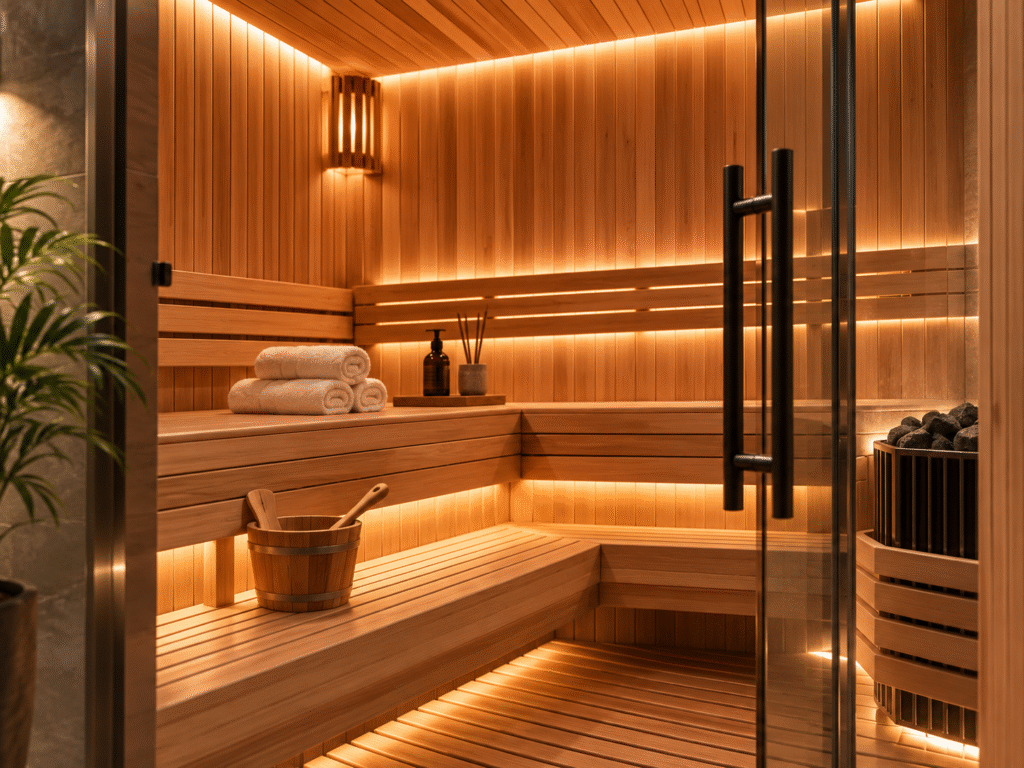
A sauna is a wood-lined cabin heated by an electric or infrared heater to between 70°C and 100°C, with humidity typically kept under 20%. The dry air is what allows the body to tolerate such high temperatures for a full session. Traditional saunas heat the air around you; infrared saunas heat the body directly at a lower ambient temperature, which some people find easier to sit through. Either way, the appeal is the same — intense, dry heat that raises heart rate, opens pores and leaves you loose and relaxed.
What is a steam room?
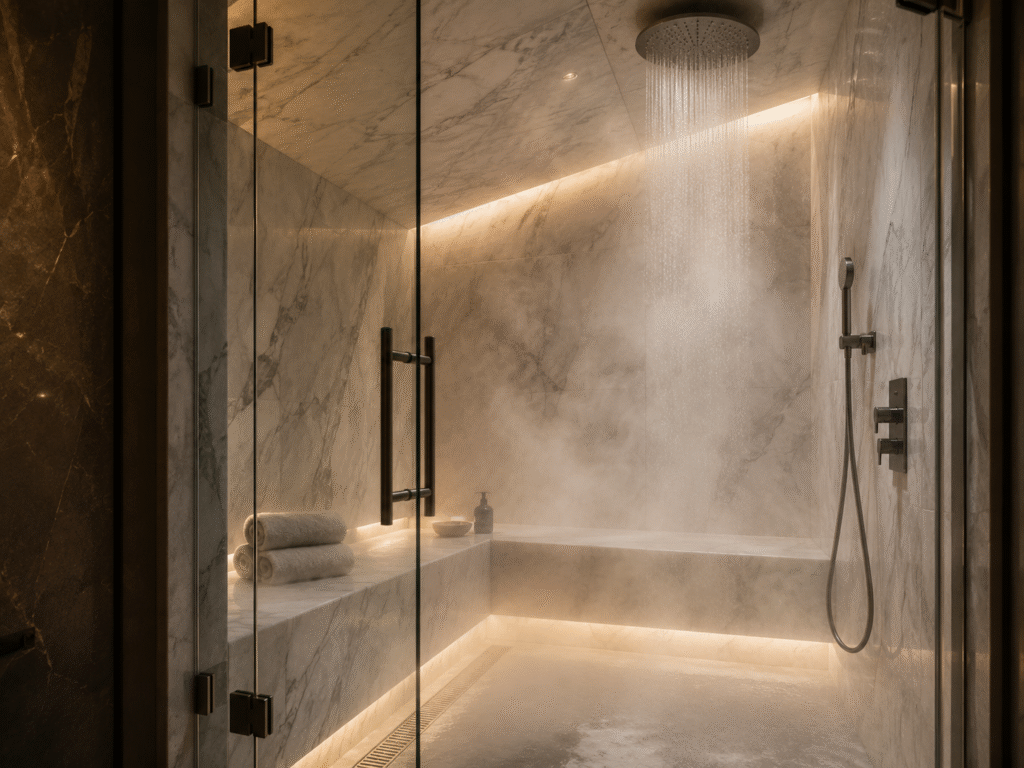
A steam room is a fully sealed, waterproofed and tiled enclosure fed by a steam generator, which pumps humidity up to nearly 100% at a much gentler 40°C to 50°C. The room feels heavier and more immediately intense than a sauna despite the lower temperature, because the moisture keeps sweat from evaporating off the skin. It’s this same moisture that makes steam rooms so effective for the respiratory system — the warm, wet air is far more soothing on airways and sinuses than dry heat.
What is a steam room?
Sauna vs steam room: side-by-side comparison
| Factor | Sauna | Steam Room |
|---|---|---|
| Heat type | Dry heat | Moist heat |
| Temperature | 70°C – 100°C | 40°C – 50°C |
| Humidity | Under 20% | Close to 100% |
| Best known for | Cardiovascular conditioning, muscle & joint relief, deep detox sweat | Respiratory & sinus relief, skin hydration, congestion |
| Installation | Prefabricated cabin, minimal waterproofing | Sealed, sloped, waterproofed enclosure + generator |
| Running cost | Lower — efficient once heated | Slightly higher — water + generator load |
| Maintenance | Wipe down wood panelling | Regular grout, seal & drainage upkeep |
| Indicative cost (India) | ₹30,000 – ₹2,00,000+ depending on type and size | ₹60,000 – ₹2,50,000+ for a complete setup |
Prices are indicative for 2026 and vary by brand, capacity and customisation. For an exact quote, it is always best to see the setup in person.
Health benefits: is one actually better for you?
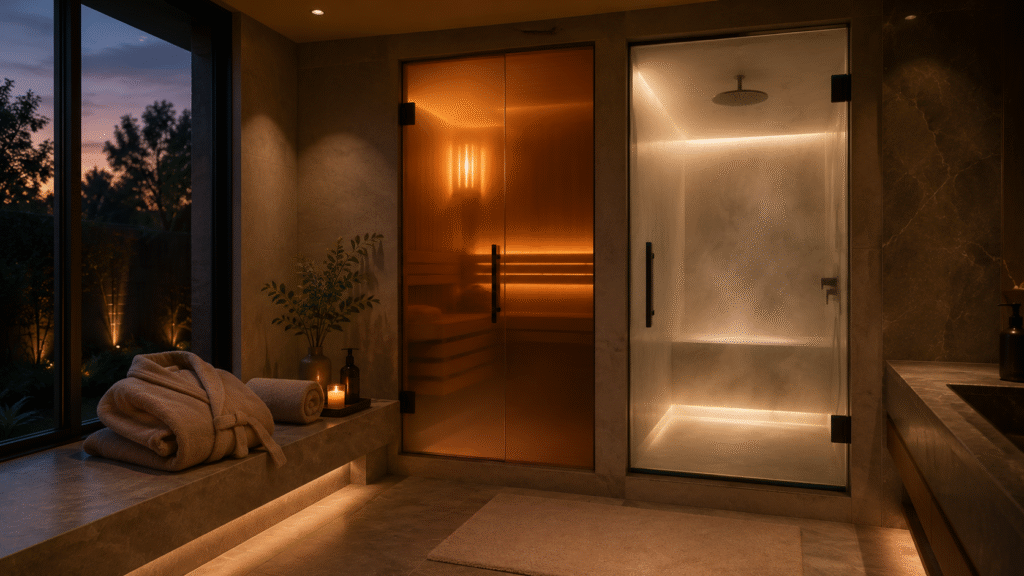
Both improve circulation and help with relaxation and recovery, but they lean in different directions. Saunas are associated with cardiovascular conditioning — the dry heat raises heart rate in a way similar to light exercise — plus deeper detox through sweating and relief for joint stiffness, which is why they’re popular with people managing arthritis or recovering from workouts. Steam rooms are better for respiratory relief: the moist heat opens airways and sinuses, and is a common recommendation for congestion, dry skin and general skin hydration. If allergies, dust or dry winters are a recurring issue in your household, a steam room does more for that specific problem than a sauna does. Neither is medically prescriptive — if you have a cardiovascular or respiratory condition, check with a doctor before regular use of either.
Installation and space: where saunas pull ahead
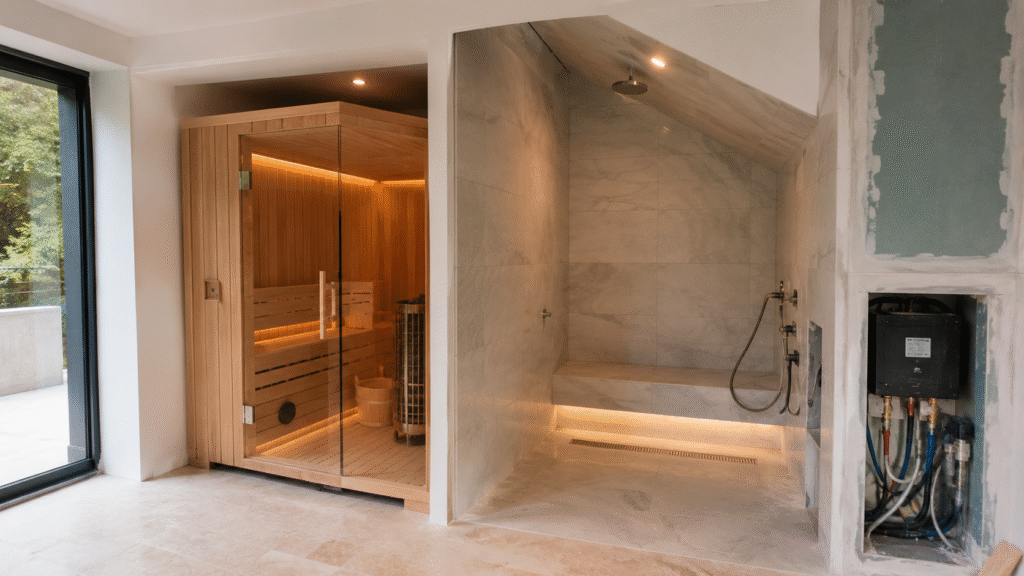
This is the practical dividing line. Saunas are typically prefabricated, self-contained cabins that can be installed in a corner of a bathroom, a terrace, or a dedicated wellness room, with far less waterproofing work since there’s no standing moisture. Steam rooms need a fully sealed, sloped-ceiling enclosure so condensation runs off rather than dripping on you, plus a generator installed nearby — which makes them marginally more involved to retrofit into an existing bathroom, though a well-planned wellness zone handles both without issue. For apartments and mid-size Gurgaon homes, a compact sauna is often the easier retrofit; for renovations where the bathroom is being rebuilt anyway, a steam generator paired with a glass shower enclosure is a natural add-on.
Installation and space: where saunas pull ahead
Cost: what you are really paying for
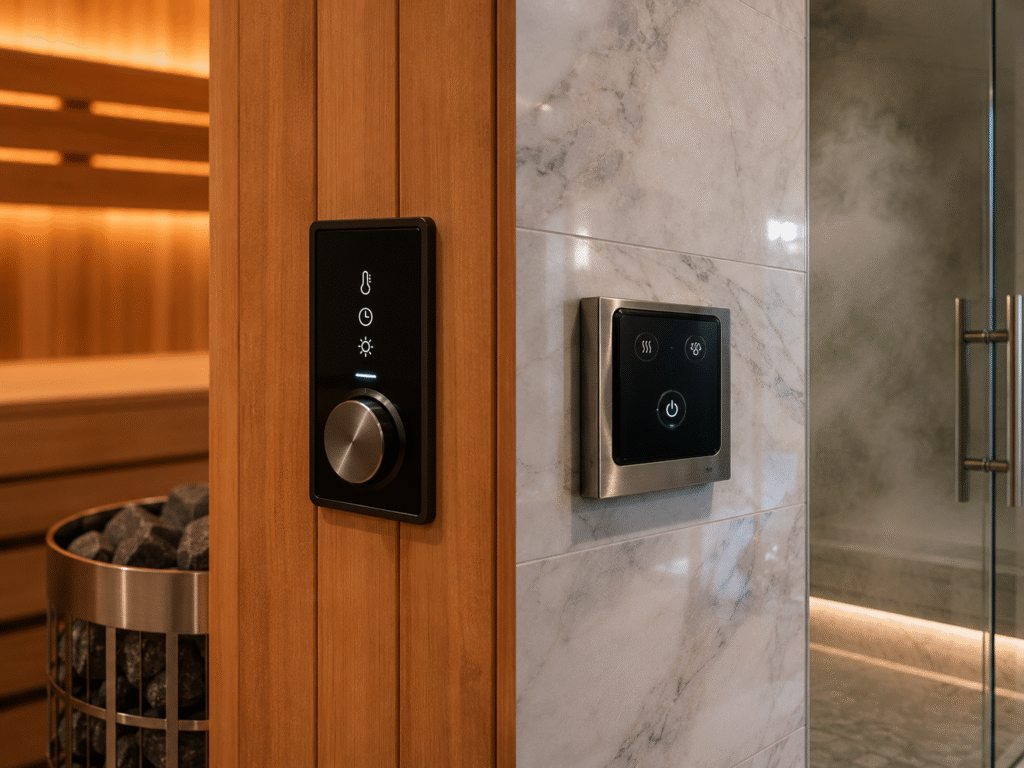
Saunas generally cost less to run per session since dry heat requires less energy to sustain once the cabin is heated, and maintenance is mostly wiping down wood panels and checking the heater. Steam rooms consume more water and slightly more power to keep the generator running, and because the room stays wet, tile grout, sealants and drainage need more regular upkeep to prevent mould. That’s the trade-off for the respiratory and skin benefits — worth it for most households, but worth knowing before you commit.
So which should you choose?
Choose a sauna if you want something that installs quickly with minimal changes to existing plumbing, and you’re drawn to the ritual of high, dry heat for cardiovascular and muscle recovery. Choose a steam room if sinus issues, dry skin or pollution and dust are a recurring household complaint — the moist heat will do more for you day to day. And if space and budget allow, pairing a compact sauna with a steam-enabled shower enclosure gives you both — a genuinely five-star setup that most premium Gurgaon homes are increasingly building toward.
See sauna rooms and steam generators atDe Ceramica, Gurgaon
The easiest way to settle this comparison is to experience both. At De Ceramica, our wellness collection brings sauna rooms, steam generators, spa bathtubs and luxury shower enclosures together under one roof, so you can see the build quality and finish side by side instead of guessing from a catalogue.
With more than 21 years in the industry, our team offers personalised design guidance and coordinated installation support across Gurgaon and the wider Delhi NCR region — helping you plan a wellness zone that fits your space, your budget and your household’s actual needs, not just what looks good in a brochure.
Visit us at A-511, Sushant Lok Phase 1, opposite IFFCO Chowk Metro Station, Gurugram, or book a free design consultation and we will help you choose the right home wellness upgrade.
Frequently asked questions
Q.1 Is a sauna or steam room better for weight loss?
Neither causes real fat loss — any weight lost is water weight regained once you rehydrate. Both can be a relaxing complement to exercise and recovery, not a replacement for it.
Q.2 Can I install both a sauna and a steam room at home?
Yes, and many premium homes do — a compact sauna cabin alongside a steam-enabled shower enclosure gives you the benefits of both without needing two separate large spaces.
Q.3 Which is easier to maintain, a sauna or a steam room?
Saunas are generally lower maintenance since there’s no standing moisture — just wipe down the wood panelling. Steam rooms need more regular attention to grout, seals and drainage to prevent mould, given the constant humidity.